Aluminum Fence Contractors Near Me: What Installation Involves
Updated: 7 days ago
By Jack Aiello
When homeowners search for aluminum fence contractors near me, they are usually looking for more than a product. They want to know whether the fence will suit the property, whether the gates will operate properly, and what the installation process will involve. A professional aluminum fence installation typically includes consultation, site assessment, layout planning, post and gate coordination, installation, and a final review.
This guide explains what a local aluminum fence contractor should do before and during installation. It is not a DIY installation guide. Posts, gates, property boundaries, underground utilities, and changing site conditions all deserve professional planning.
What does an aluminum fence contractor do before installation?
The most important work often happens before a crew sets a post. A responsible contractor first learns how you intend to use the fence and then evaluates the property. Aluminum fencing may define a boundary, protect a pool area, provide a pet or child-safe enclosure, add structure around landscaping, or create a polished perimeter for a business or estate.
Start with the property and your priorities
A consultation should address privacy, security, visibility, appearance, access, pets, children, vehicles, and the locations where people will enter or exit. Aluminum is often selected for its open appearance, refined lines, and resistance to rust, but the right layout depends on the property. A fence that looks appropriate on a level front lawn may require a different approach on a wooded, sloped, or irregular lot.
Northstar Fence & Rail provides custom residential and commercial fencing in aluminum, wood, vinyl, and chain link, as well as gates and pool enclosures. The broader fence installation and commercial fencing service can help you understand how the company approaches different property types and project goals.
Assess terrain, soil, access, and existing conditions
New England properties can present rock, ledge, roots, slopes, wetlands, drainage concerns, retaining walls, narrow side yards, or limited equipment access. These conditions can affect the fence line, post locations, installation sequence, and the type of preparation a project requires. A contractor should identify these factors before finalizing the plan rather than treating every property as a standard rectangle.
Soil and drainage also matter around gates. A gate depends on properly positioned posts, suitable clearances, reliable hinges and latches, and a finished grade that allows it to open and close. Northstar assesses ground and site conditions so an aluminum gate can be planned for dependable long-term performance, particularly where frost, heavy rain, or changing seasonal conditions may affect the property.
How is the aluminum fence layout planned?
Layout planning connects the property, the selected fence system, and the way the completed enclosure needs to function. The contractor reviews corners, ends, transitions, changes in grade, structures, driveways, walkways, and the locations of pedestrian or driveway gates.
Posts and panel spacing are part of a system
Aluminum fence panels and posts are designed to work together. Post spacing is not a universal number that can be copied from one property to another. It depends on the selected system, panel dimensions, post size, corners, grade changes, end conditions, and gate openings. A professional installer accounts for those relationships during the layout instead of asking the homeowner to calculate a generic spacing pattern.
On a level section, panels may follow a consistent line. On a slope, the contractor may need to evaluate whether the fence should step, follow the grade, or transition between sections. The finished result should maintain intentional lines, appropriate ground clearance, and consistent visual proportions while responding to the land.
Gate integration requires extra planning
Gates are not simply fence panels with hinges added later. A gate opening must account for the gate width, hinge and latch hardware, post strength, swing direction, walking or driving clearance, and the finished ground surface. A contractor should also discuss whether the gate needs to coordinate with a pool enclosure, driveway, path, property boundary, or commercial access point.
Northstar installs, customizes, and repairs gates. An educated contractor can help identify an opening that is convenient to use and realistic for the site. Poor installation, movement in the ground, drainage, or an overlooked grade change can contribute to a gate that drags, shifts, or stops latching correctly over time.
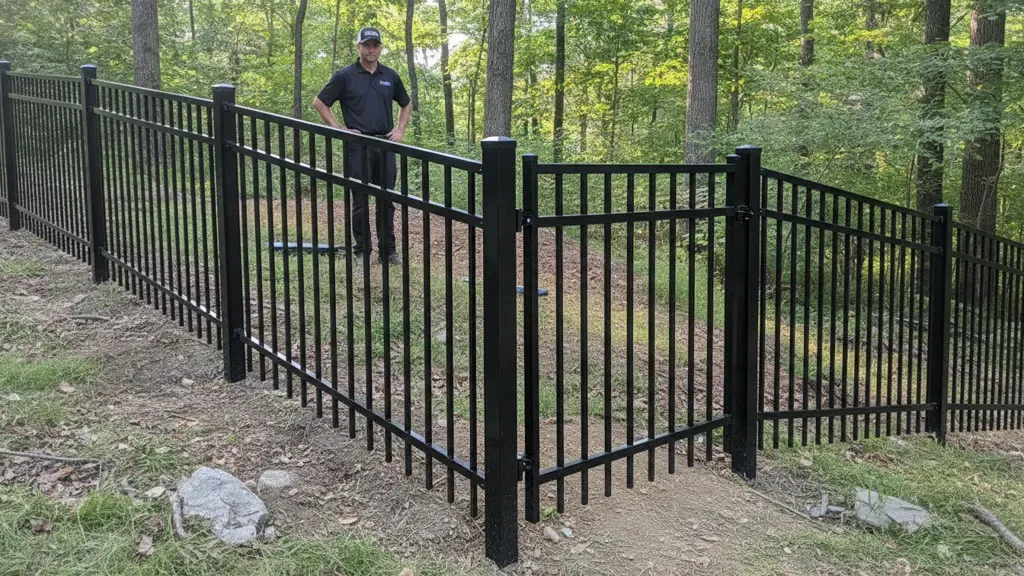
What happens on aluminum fence installation day?
Once the scope and layout are confirmed, the installation team prepares the work area and follows the project plan. The exact sequence varies with the property and selected fence system, but homeowners can generally expect the following types of work.
- Confirm the work area:
The team reviews the planned line, access, gate openings, existing features, and any site conditions that need attention before work begins.
- Prepare post locations:
The installer works within the approved layout and accounts for the system, grade, soil, rock, ledge, utilities, and required clearances.
- Set and align posts:
Posts are positioned to establish the strength, height, direction, and visual alignment of the fence. Corners, ends, and gate posts receive particular attention.
- Install panels and rails:
Sections are connected to the posts and adjusted to follow the planned line and grade. The goal is a stable, consistent fence rather than a collection of disconnected panels.
- Install and adjust gates:
Hinges, latches, swing direction, clearances, and alignment are checked so the gate functions with the completed grade and surrounding fence.
- Review the finished work:
The contractor checks the appearance, transitions, access points, gate operation, and cleanup before the project is considered complete.
Homeowners do not need to manage the technical installation sequence themselves. Their role is to communicate priorities, identify access or property concerns, and raise questions during the consultation and project review.
How should you evaluate local aluminum fence contractors?
A local search is a useful starting point, but the closest result is not automatically the right fit. Compare how each contractor approaches the property, communicates the scope, plans gates, and responds to local conditions. A strong consultation should feel like a conversation about your project, not a generic product pitch.
Look for relevant experience
Ask whether the company has handled projects similar to yours, such as a residential boundary, pool enclosure, sloped wooded lot, luxury property, commercial perimeter, or coordinated builder project. The contractor should be comfortable discussing the details that make your site different from a standard installation.
Northstar brings more than 50 years of combined fencing and family-business experience through its founders. Ben Coppola's Merrimack Valley family-business heritage and Jack Aiello's family-owned fence-company background support a service philosophy built around clear communication, integrity, and expert craftsmanship.
Review the scope, not just the material name
A useful proposal should make the intended work understandable. Ask what fence style, height, color, gates, layout, preparation, access, cleanup, and coordination responsibilities are included. It should also be clear how the contractor will communicate if concealed conditions or property questions affect the plan.
Be careful with unsupported promises about universal timelines, warranties, or results. A credible contractor explains what is known, what requires site review, and which questions must be confirmed with the applicable municipality or authority.
What local requirements should be checked in Massachusetts and New Hampshire?
Fence requirements and permit processes can vary by state, town, property type, zoning district, and project circumstances. A contractor can help identify questions, but homeowners should confirm current requirements with the applicable local authority. Massachusetts maintains its current State Building Code resources, and New Hampshire permit procedures are tied to local enforcement processes under RSA 155-A:4.
Before any digging, the project should also follow the appropriate utility-marking process. Massachusetts directs property owners and professionals to Dig Safe guidance for preventing damage to underground utility lines. Local requirements are especially important for fences near roads, pools, wetlands, historic properties, shared boundaries, or other regulated areas.
For additional context on choosing a fence professional, see Northstar's guide to the company's background and service approach. The goal is not to replace a site-specific consultation, but to help you ask better questions before work begins.
Why choose a local aluminum fence contractor?
A regional contractor can bring useful familiarity with local terrain, seasonal conditions, property types, and municipal questions across Massachusetts and Southern New Hampshire. That does not mean every local company offers the same level of planning. It means the consultation gives you an opportunity to evaluate whether the contractor understands the conditions your property presents and can communicate a realistic plan.
For Northstar, that process is consultation-led. The team helps homeowners, businesses, contractors, property managers, and developers consider the purpose of the fence, the property, the material, the gates, and the long-term use of the completed project. The brand promise is simple: Exceptional Service. Expert Craftsmanship.
Key questions to ask before hiring
How will you assess my property's slope, soil, rock, drainage, and access?
How will the layout account for corners, grade changes, structures, and gates?
What is included in the written scope, including preparation and cleanup?
How will you handle questions about permits, boundaries, utilities, or local requirements?
Who will coordinate communication if site conditions change?
How will you review gate operation and the completed fence at closeout?
These questions help separate a thoughtful installation plan from a generic panel-only quote. The right contractor should be willing to explain the reasoning behind the design and help you make an informed decision for your property.
Comments