Aging Wood Fence Restoration: When Restoration or Replacement Makes Sense
Wood fence restoration can be a sensible way to retain a fence that still fits your property, but age alone does not tell you whether restoration is the right choice. For Massachusetts and Southern New Hampshire homeowners, the decision depends on the condition of the posts, rails, boards, gates, and surrounding site—as well as what you need the fence to do next. The useful first question is not simply how weathered the wood looks, but whether the fence’s structure and layout still serve the property.
What does wood fence restoration mean?
Restoration describes work intended to improve or retain an existing fence rather than automatically replacing the entire enclosure. Depending on the fence, that may involve replacing selected sections, addressing damaged components, or helping an aging fence function and look better. Northstar provides fence repair and restoration services in Massachusetts and New Hampshire. Restoration does not mean every old fence can or should be saved, or promise that an older structure will perform like a new one.
Appearance and structural condition are separate questions. Gray or faded boards may look tired while the posts and rails remain serviceable. A freshly coated surface, on the other hand, cannot resolve a post that has loosened or a rail that no longer supports the fence. A discussion of severely weathered wood restoration describes sanding in the context of window sills, not fences; that distinction is a useful reminder that surface treatment alone is not a structural assessment. Read the discussion of severely weathered wood.
For a fence, restoration planning should consider the whole assembly and its purpose. Is the fence meant to provide privacy, define a boundary, keep a pet in the yard, or complement the house? If its condition or arrangement no longer supports that purpose, restoring the visible boards may not be the most useful investment of effort.
Which parts of an aging fence deserve attention?
A fence is made up of connected parts. One weak component can affect the stability or usefulness of adjacent sections, so an assessment should look beyond the most obvious damaged board.
- Posts:
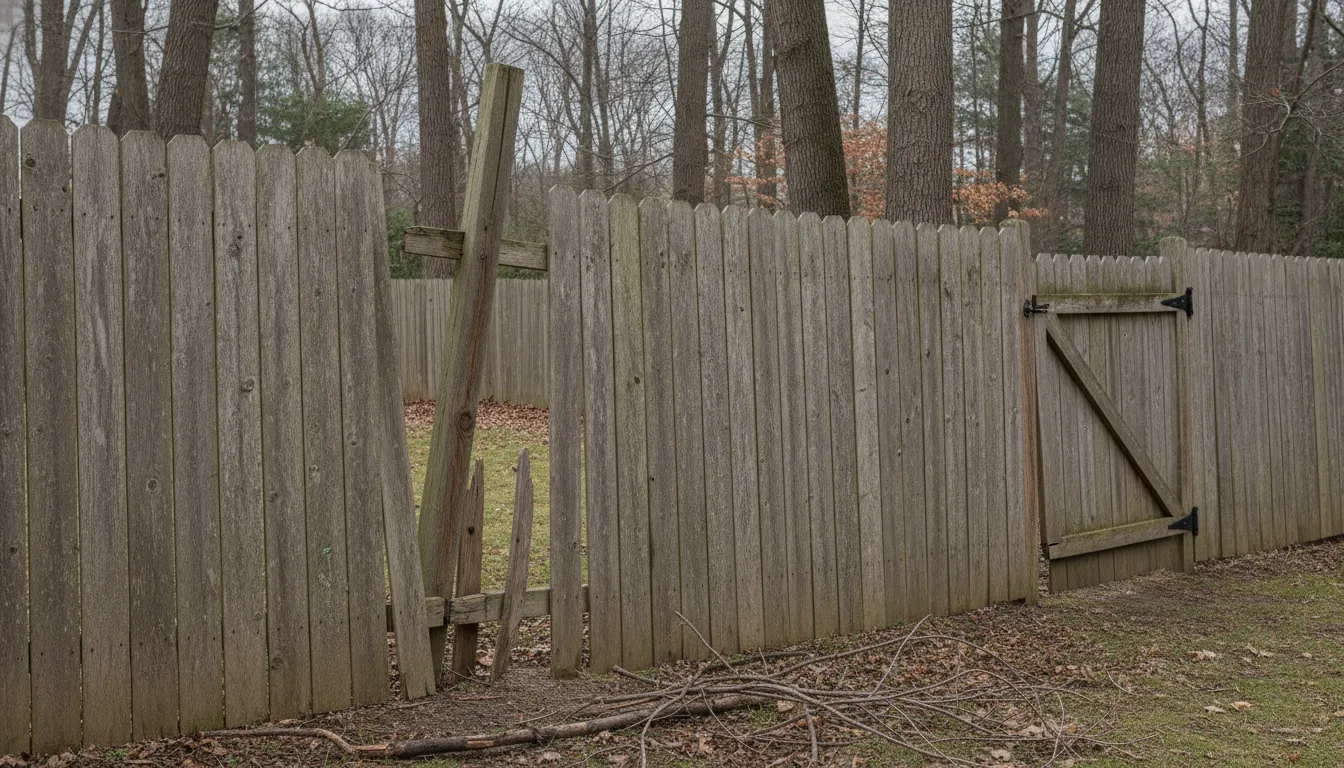
Posts support the fence and help keep it aligned. Leaning, movement, or deterioration where a post meets the ground can point to a structural concern that goes beyond surface weathering.
- Rails:
Rails connect sections and carry the boards. A rail that is split, sagging, or no longer firmly connected may affect more than one board.
- Boards or pickets:
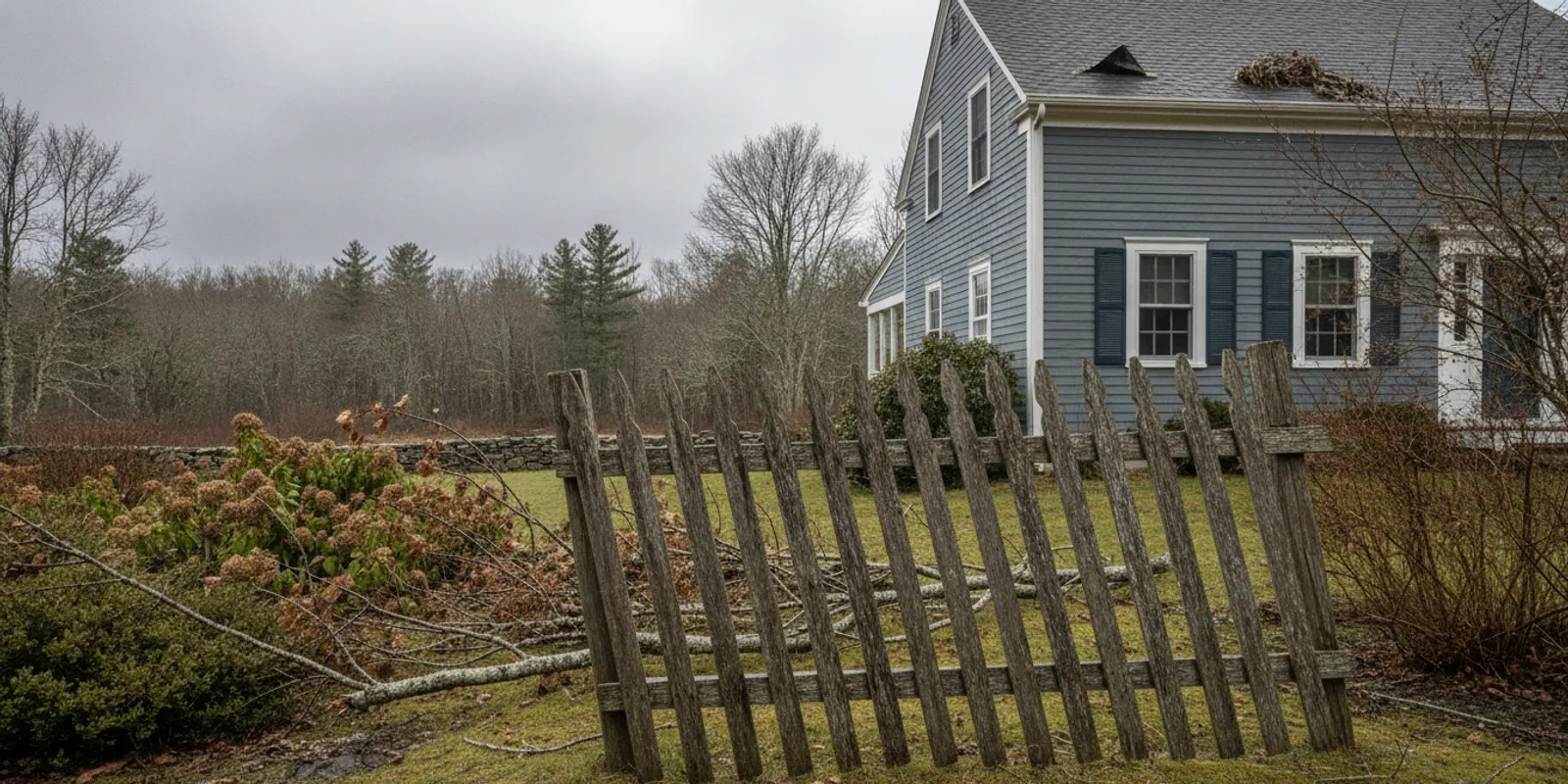
Individual boards can crack, loosen, warp, or go missing. Localized board damage may be manageable when the rest of the section remains sound, but repeated damage can signal a broader issue.
- Connections and fasteners:
Loose connections can allow movement, gaps, or rattling. Their condition matters alongside the wood itself.
- Gates:
A gate is a moving part with its own alignment and support needs. A gate that drags, will not close, or places strain on its frame can affect the nearby fence as well.
- Ground and drainage:
Slope, water flow, soil, roots, and access can influence how a fence sits and how repairs are planned. A problem near the ground may have a different cause from simple exposure on a board’s face.
These observations are useful for describing what you see, but they are not a substitute for a professional assessment. Avoid assuming that a single symptom identifies the cause. A fence that leans, for example, may need more than a board replacement; the relevant question is what is moving and why.
When might restoration be worth considering?
Restoration may be worth discussing when the fence’s basic layout still works and the areas of concern appear limited. A few damaged boards, a localized section that needs attention, or age-related appearance changes may leave room for a targeted approach, depending on the condition of the supporting parts. The point is not to label the work in advance, but to find out whether the existing fence can reasonably continue to meet your needs.
It can also make sense to preserve a fence when its style is an important part of the property. Older homes, established gardens, and carefully planned yards may benefit from keeping an existing fence’s character, provided that retaining it is practical. The visual fit matters, but should be weighed with stability, function, and the expected scope of work.
Think about what you want to keep. Is the current height and degree of privacy appropriate? Does the fence follow the property in a way that suits the yard? Is the gate where you need it? If the answers are mostly yes, restoration may be a reasonable path to explore. If your needs have changed, restoration of the existing arrangement may preserve features that no longer work for you.
A consultation can help sort these questions out. Northstar helps homeowners decide on the best course of action based on the fence’s condition, the cause of the damage, its material, and the property’s needs. That means considering whether a limited repair or restoration is appropriate, rather than treating replacement as the default or promising that every aging fence can be saved.
It is also worth discussing how a localized repair may look beside older wood. New or replacement boards can differ from weathered boards in color and surface appearance, even when the goal is to retain the existing fence. The amount of visible contrast depends on the materials and the condition of the surrounding sections. If visual continuity matters to you, raise that early and ask what can reasonably be expected before choosing the scope.
Consider what the restoration would leave behind. If only one section is addressed, will the remaining fence still meet your needs? If a gate or transition between sections is part of the concern, does the proposed work account for how those pieces connect? Clear answers help you avoid treating a visible symptom while overlooking the larger reason you are considering work.
When should replacement be part of the conversation?
Replacement deserves consideration when concerns affect multiple parts of the fence or when the current layout no longer fits the way you use the property. Widespread movement, repeated failures across several sections, or an arrangement that no longer gives you the privacy, boundary definition, or access you want may make a larger plan more practical to discuss.
A fence can also be at a point where addressing one visible problem would leave other major concerns in place. If several posts, rails, and boards need attention, a homeowner should understand the scope of restoring the existing fence before deciding. The right comparison is not “old versus new” in the abstract. It is whether the proposed restoration would leave you with a sound, useful fence suited to the property, compared with planning a replacement that addresses the same needs.
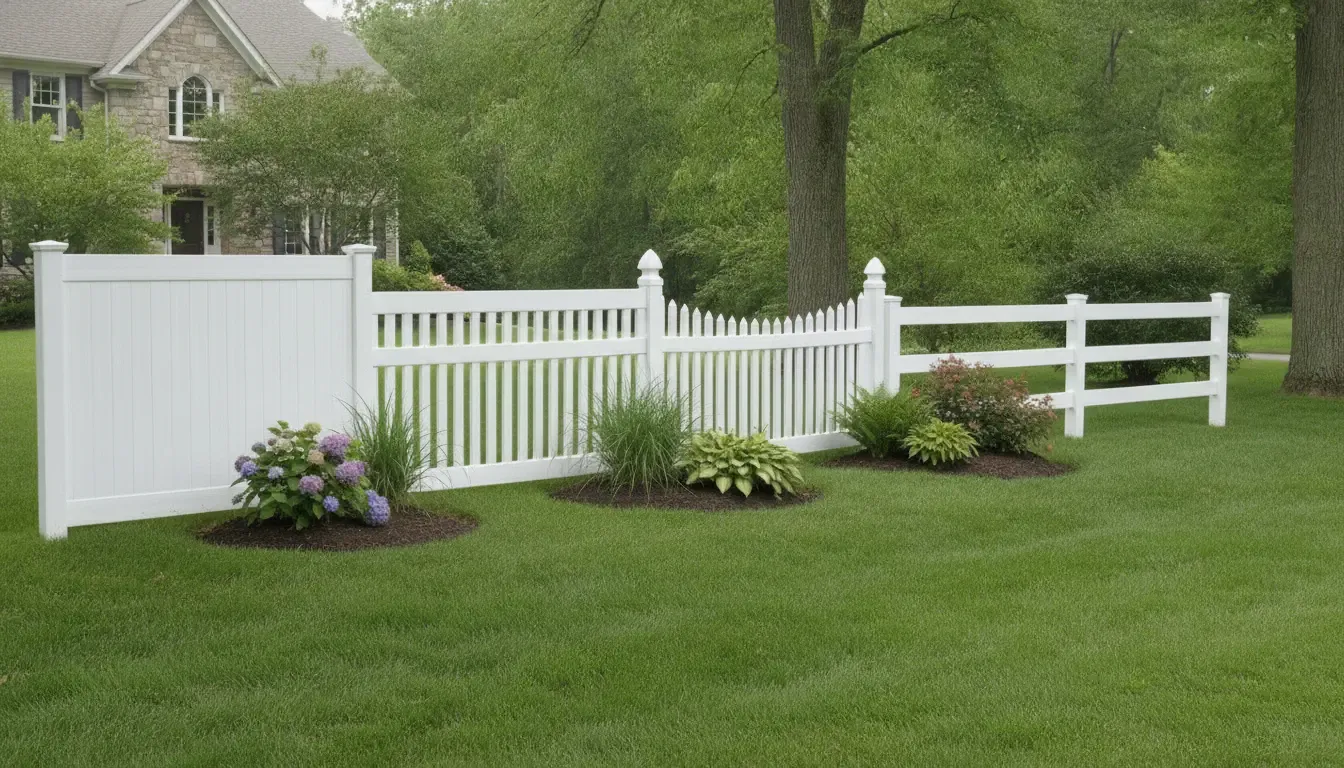
Replacement may provide an opportunity to reconsider material, style, height, access points, or the route across the yard. Those choices should be grounded in the property and applicable local requirements. They should not be made on the assumption that one design suits every New England home or site. A new plan can introduce its own questions about terrain, access, and neighboring features, so it is worth defining the desired outcome before settling on a scope.
How do Massachusetts and Southern New Hampshire site conditions matter?
Weather and land vary from one property to another. Rain, freeze-thaw seasons, vegetation, and changing ground conditions can all be part of the setting in which a wood fence ages. The conditions that matter on your lot depend on its slope, soil, drainage, shade, exposure, and how water moves around the fence. A wooded Haverhill yard, a sloped property in southern New Hampshire, and an open lot near the coast do not necessarily present the same planning concerns.
Where ground is uneven, the fence’s alignment and the way sections follow the terrain are important to discuss. Rock or ledge can affect access and the approach to work; sandy or wet areas may raise different site questions. Trees and established landscaping can limit equipment access or affect where a fence can reasonably run. These are property-specific considerations, not conditions to assume across Massachusetts or New Hampshire.
Water near the fence deserves attention in context. If a section appears to move or deteriorate near an area where runoff collects, it is useful to mention that relationship when requesting an assessment. It does not establish the cause by itself, but it helps a contractor consider the site as well as the wood. The same applies to a gate that has shifted on sloped or changing ground: its position and surrounding conditions may be relevant to the plan.
Before choosing restoration or replacement, confirm current rules that apply to your address and project. Requirements can differ among municipalities and between states, and may depend on the proposed location or fence purpose. Do not rely on a general online statement as a substitute for checking with the appropriate local authority. A consultation can help identify questions to resolve during planning, but local requirements should be verified with the municipality or other applicable authority.
What should the scope account for?
Set the boundary of the question before comparing options. Is the concern limited to a particular run, or does it affect the enclosure around several sides of the yard? Does the fence meet a house, shed, retaining feature, or another type of boundary? Those connections can influence what a useful scope needs to address. A contractor should understand the layout and the way you use each area, not only inspect the most visible spot.
Separate essential function from preferences. If keeping a pet within a particular part of the yard is the main concern, point out the specific areas where the fence needs to perform that role. If privacy or a consistent appearance matters most, explain which views or sections are important to you. These priorities can affect whether preserving the current arrangement makes sense or whether a broader redesign should be discussed.
Also identify features that should remain undisturbed when possible, such as established plantings, paths, or yard access. Their presence does not determine whether restoration or replacement is right, but it gives the contractor context for planning and discussing access. A complete conversation links the visible condition of the fence to the whole property, the intended outcome, and the practical constraints around the work.
How should you compare restoration and replacement?
It helps to compare the options against the same priorities. Write down the fence’s main job, the problems you have noticed, and any features you want to preserve or change. Then ask a contractor to explain which parts appear suitable to retain, what work each option would involve, and what limitations remain afterward. You do not need to diagnose the fence before beginning that conversation.
Use the following questions to organize the discussion:
- Condition:
Are concerns isolated, or do they appear across several connected sections?
- Function:
Will the fence still provide the privacy, boundary, pet containment, or access you need after restoration?
- Site:
Are slope, soil, drainage, trees, rock, or access likely to affect the scope?
- Appearance:
Is preserving the existing style important, or would a different design better fit the home and yard?
- Local checks:
What municipal requirements or property constraints should be confirmed before work is planned?
- Scope clarity:
Which components would be addressed, and which older components would remain?
Ask for a clear explanation rather than a quick label. “Restore” can cover different scopes, and “replace” can refer to a full enclosure or a defined portion. Make sure you understand what the recommendation includes, what it leaves in place, and how it relates to the reason you contacted the contractor. Northstar’s consultation-first approach is intended to help homeowners weigh options in light of the fence’s condition, the cause of damage, the material, and the needs of the property.
If you are also reconsidering the fence’s style or purpose, Northstar’s guide to residential fencing options can help you frame material and use questions for that conversation. It is a planning resource, not a substitute for evaluating the existing fence or confirming municipal requirements.
What should you prepare before a consultation?
A few details can make a conversation more productive. Note when you first noticed the issue, whether it seems to have changed, and which sections are involved. Describe the fence’s main purpose and anything that has changed on the property, such as a new use for the yard, a gate that sees more frequent use, or altered drainage. You may also want to identify the areas you would most like to preserve.
Photos can help show the overall layout and specific concerns. Include wider views that show how the fence relates to the house, yard, and slope, as well as closer views of visible damage. Photos are context, not a diagnosis: a post’s condition below ground or the reason for a shift may not be clear from an image. If you are discussing a particular gate or section, point out its location and what function it serves.
It is equally useful to explain what success means to you. One homeowner may want to keep a familiar boundary while addressing a limited problem. Another may need a different layout or access point. A contractor can make a more relevant recommendation when the desired result is clear alongside the fence’s present condition.
Frequently asked questions about wood fence restoration
Can an old wood fence always be restored?
No. Age and surface appearance alone do not establish whether restoration is practical. The condition of posts, rails, boards, connections, gates, and the site all matter. An assessment can clarify whether the existing structure can continue to meet your needs or whether replacement should be considered.
Does a weathered appearance mean the fence needs replacement?
Not necessarily. Weathering can affect appearance without showing the full structural condition. Conversely, a fence that looks presentable can still have a problem with support or alignment. Consider both appearance and function, and have concerns assessed before choosing a scope.
Should I decide on restoration before contacting a contractor?
You do not need to decide in advance. Describe what you see, what the fence is meant to do, and what you would like to preserve or change. Northstar can help you weigh the options based on condition, cause of damage, material, and property needs.
Do local rules matter when restoring an existing fence?
They may. Requirements can vary by municipality and by project, so check current rules with the appropriate local authority for your address. If you are changing the fence’s location, layout, or other features, confirm applicable requirements before finalizing plans.
Choose a plan that fits the fence and the property
Wood fence restoration is most useful to consider as a property decision, not a cosmetic fix in isolation. Look at the whole fence, identify the outcome you need, and compare a realistic restoration scope with a replacement plan if the existing structure or layout no longer serves you. A consultation can help clarify those choices while accounting for the material, damage, and conditions on your Massachusetts or Southern New Hampshire property.
Comments