Fence for Church Property: Planning in Massachusetts and New Hampshire
Planning a fence for church property means balancing more than appearance. A congregation may need to guide visitors toward an entrance, define a play area, protect a garden, or add privacy without making the grounds feel closed. The right approach depends on how the property is used, its layout, and the experience you want members and neighbors to have.
What should a fence for church property accomplish?
Begin with the reason for considering a fence. A clear purpose helps keep the project focused and makes it easier to compare possible layouts and materials. One church may want to make a play yard easier to supervise. Another may need to distinguish a parking area from a neighboring property, protect a memorial garden, or direct visitors to an accessible entrance.
List the areas where a fence could help, then consider how people use them throughout a typical week. Include Sunday services, weekday programs, evening gatherings, deliveries, maintenance, and seasonal events. A fence that works during a quiet afternoon should also make sense when several groups arrive at once.
- Visitor wayfinding:
Could a fence gently guide people toward the main entry instead of leaving them unsure where to go?
- Child and family spaces:
Would a defined play area help staff and caregivers keep children within a visible boundary?
- Privacy:
Does a counseling area, outdoor gathering space, or neighboring property call for more screening?
- Property definition:
Are there areas that need a clearer boundary, such as a garden, service space, or parking edge?
- Appearance:
Should the fence blend into the landscape, complement the building, or create a more visible and formal boundary?
These goals can compete. A tall, solid barrier may offer privacy but block sightlines and feel imposing along a public-facing walkway. An open design can preserve visibility and a welcoming atmosphere, but it may not provide the screening or separation the church wants. Identifying the most important outcome helps the congregation make deliberate tradeoffs.
How can a fence for church property support daily access?
Church grounds often serve several purposes at once. Members, visitors, staff, vendors, and community groups may use different entrances or move through the property at different times. Map those routes before settling on a fence line. Consider where people arrive from parking, where they approach the building, and how they reach outdoor gathering areas.
Keep the arrival experience in mind. A fence should not unintentionally steer visitors toward a side or service entrance when the main entrance is elsewhere. The gate location, opening direction, and relationship to the walkway can affect how intuitive the property feels. If a church hosts larger events, consider how people will enter and leave without creating a pinch point or interfering with vehicle circulation.
Service and maintenance access also matters. Grounds crews may need to reach lawn areas, equipment, or storage. Deliveries may use a different route from worshippers. A layout that works for a single pedestrian entry can become inconvenient if it blocks routine access or requires staff to repeatedly open a gate. Discuss these regular movements with the people who manage the property before finalizing a concept.
For areas used by children, visibility is an important planning consideration. A boundary should fit the supervision approach and the way adults observe the space from nearby rooms or paths. For a memorial garden or quiet outdoor area, a softer transition may be preferable to a prominent barrier. The best layout is the one that supports the space's purpose while keeping circulation clear.
Which fence material suits a church setting?
Material affects the character of the grounds as well as the level of screening and upkeep a church should expect. Think about the building's architecture, nearby homes, landscaping, and the role of each fenced area. There is no single material that fits every church property.
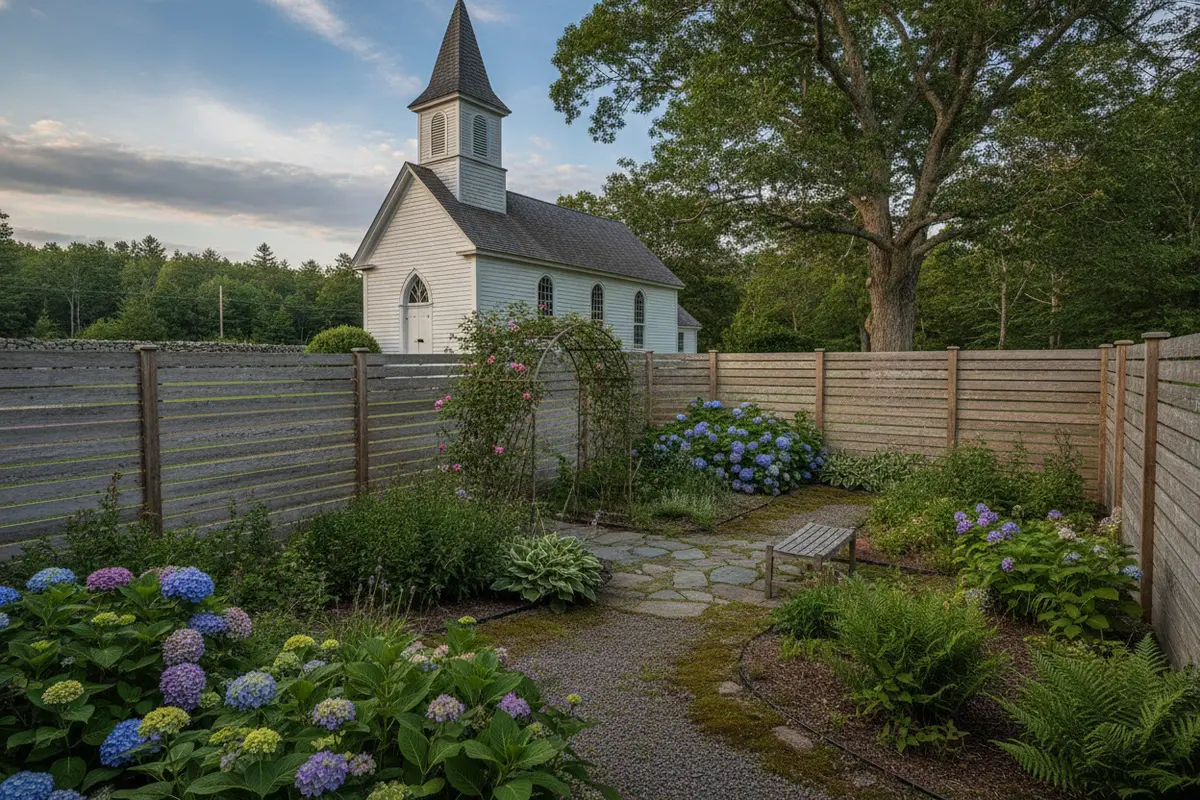
Wood fencing for privacy and a traditional character
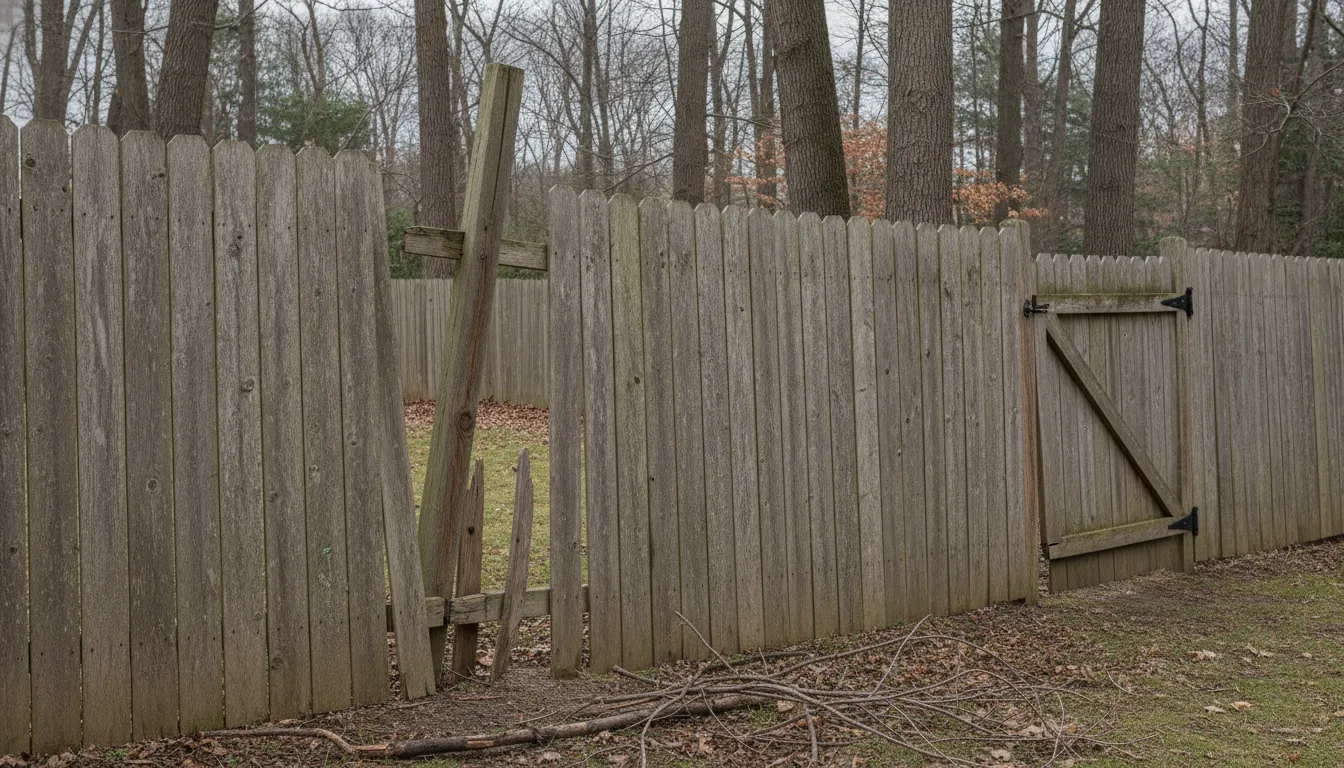
Wood fencing can provide a solid visual boundary for a private courtyard, utility area, or outdoor space where screening is important. Its natural appearance can complement traditional architecture and mature landscaping. The tradeoff is that a solid fence can feel visually heavy in a prominent location, and wood needs ongoing attention as weather and age affect its appearance. Before choosing it, consider whether privacy is needed along the entire run or only in a specific section.
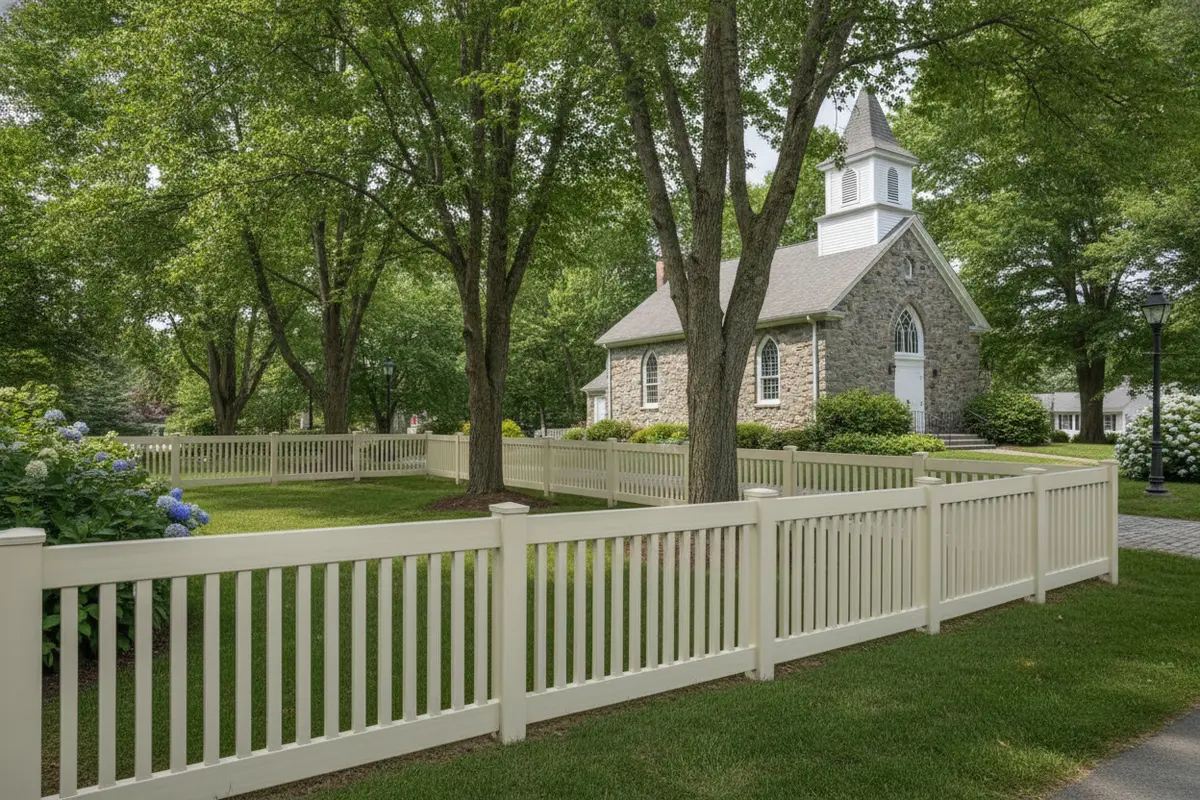
Vinyl fencing for a neat, low-maintenance appearance
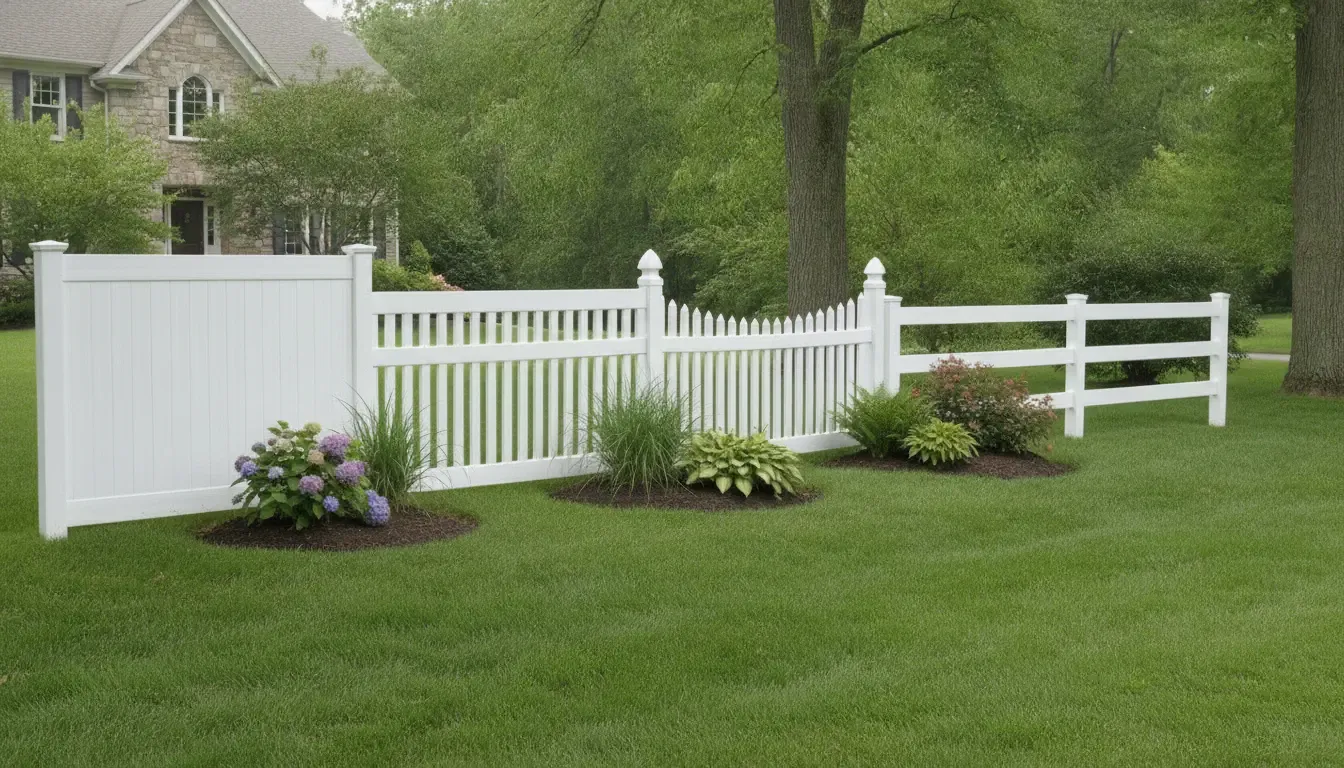
Vinyl fencing offers a consistent, finished look and is often considered when a congregation wants privacy with less routine surface maintenance than wood. It can work well where a clean boundary is a priority. Its appearance may be less suited to every historic or highly landscaped setting, and a solid panel can still limit views. Compare the proposed style with the church building and surrounding grounds rather than choosing from a sample alone.
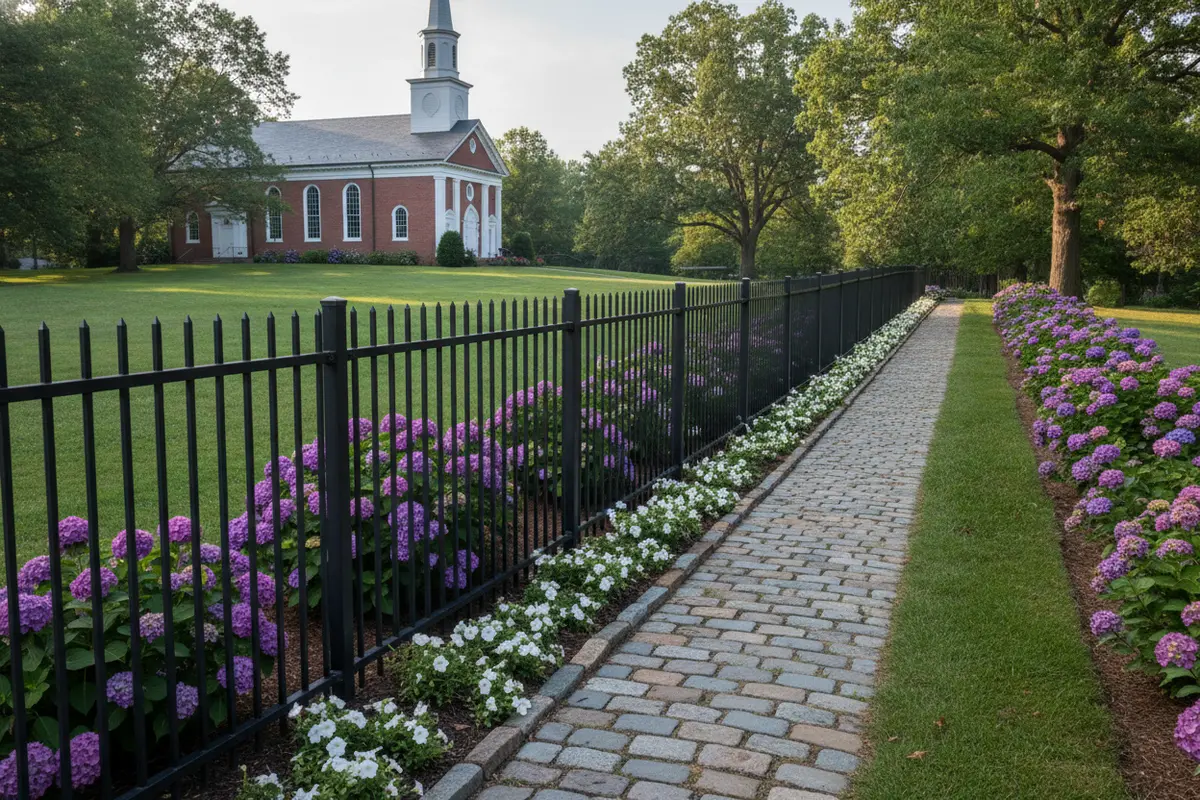
Aluminum fencing for open sightlines
Aluminum fencing can define a boundary while preserving views across the property. That open quality may suit a front lawn, walkway, or landscaped area where a solid screen would feel out of place. It generally provides less visual privacy than a solid fence, so consider whether the purpose is to mark an edge or to screen an activity. The profile and color should also be considered alongside the church's architecture and landscape.
Look at a material in context: how it will appear from the street, from inside the property, and beside existing paths or planting. A church may not need the same design around every area. A more private section near a secluded courtyard and an open boundary near a walkway can serve distinct needs, as long as the overall plan feels coherent.
What site conditions can affect fence planning?
Two properties in the same town can present very different planning conditions. Slopes, ledge, wooded edges, drainage patterns, mature trees, and narrow access can all affect where a fence can sensibly go and how work can be coordinated. A map or photo is useful for an initial discussion, but it cannot reveal every condition on the ground.
Pay attention to the transitions between areas. A fence that follows a hill or changes direction around a building may look and function differently from one on a broad, level lawn. Mature trees and established planting may be valued parts of the grounds, so the proposed route should be reviewed with care. On a busy campus, access for installation also needs consideration: where equipment may enter, how paths will stay usable, and how work can be coordinated around scheduled activities.
Property boundaries deserve attention early in the process. Churches may occupy parcels with shared edges, neighboring homes, or multiple uses. Confirm the intended fence location against the property's records and discuss unclear boundaries with the appropriate professionals before committing to a route. Do not assume that a visible landscape edge or an old fence precisely marks the legal property line.
How should a church approach local rules and approvals?
Requirements can differ by municipality and by the location and purpose of a proposed fence. A church in Massachusetts and a church in southern New Hampshire should not assume that the same process or standards apply. Zoning, permits, historic-district review, corner visibility, easements, and other local considerations may be relevant depending on the property and the proposed work.
Before approving a design, contact the applicable town or city offices and ask which requirements apply to the specific address and project. If the property is subject to an easement, deed restriction, historic review, or another approval process, confirm that early as well. Pool enclosures or other safety-related barriers can involve additional requirements, so do not rely on a general fence discussion as a substitute for confirming current rules with the relevant authority.
Because local review can depend on the property and scope, confirm the process for the specific site rather than relying on an example from another jurisdiction.
It can help to assign one representative to gather questions and keep a record of the responses. The church should also decide who has authority to approve the scope and how any needed review fits into its internal decision process. A contractor can discuss the physical design and installation considerations, while the property owner remains responsible for confirming applicable approvals and property information.
When reviewing options, bring together the people who understand the site and its use: property or facilities staff, church leadership, and, where appropriate, program leaders or neighbors who may be affected. This can surface operational concerns before the design is settled and support clear communication as the project moves forward.
How can a congregation compare options thoughtfully?
Use a short project brief to keep the discussion grounded. It does not need to solve every detail; it should capture what the church wants the fence to do and what the design must accommodate.
- Describe the need.
Identify the specific area and the problem the fence is meant to address, such as guiding visitors, screening a service area, or defining a play space.
- Identify users and schedules.
Note who uses the area, when it is busiest, and what routine access must remain available.
- Set priorities.
Rank privacy, visibility, appearance, access, and ease of upkeep. If priorities conflict, decide which are essential and which are preferences.
- Review the site.
Note slopes, trees, nearby buildings, paths, parking, and any areas where the boundary is uncertain.
- Check local requirements.
Ask the relevant municipal office about current requirements for the specific location and proposed use.
- Discuss the concept with a fencing professional.
Compare a practical layout and material choices in relation to the church's goals and site conditions.
Keep the discussion about value broader than the initial appearance. A low-visibility boundary may suit one area, while a more substantial enclosure may be appropriate elsewhere. Consider expected maintenance, the life of the space, the need for future access, and how the design fits the property as a whole. Specific project pricing should be developed for the actual site and scope rather than assumed from a general example.
How can the project stay coordinated with church operations?
Fence planning is also a coordination exercise. The person who manages the property may know about maintenance access, while program leaders understand when children or community groups use outdoor areas. Bring those perspectives together before the layout is approved. A short review with the people who use the grounds can help identify a gate that would be inconvenient, a path that needs to remain open, or a location where a fence could affect visibility.
Consider the church calendar as well as the physical plan. Services, weddings, funerals, community meals, seasonal events, and weekday programs may bring different patterns of arrival and parking. The project team should identify important dates and discuss how the work area and access routes will be communicated. No plan can eliminate every disruption, but clear expectations help staff explain what is changing and direct visitors appropriately.
Neighbors may also have a useful perspective, especially where a proposed fence runs near homes, shared access, or a prominent street frontage. A considerate conversation can clarify concerns about views, screening, or how the boundary relates to adjoining properties. It is not a replacement for checking property records or municipal requirements, but it can reveal practical issues while there is still time to discuss the design.
After the project is complete, identify who will monitor the fence and whom to contact if a gate or section needs attention. This simple responsibility handoff is easy to overlook when a project is treated only as a construction decision. Thinking ahead about routine use and care helps the church evaluate proposals not just by how they look on opening day, but by whether they continue to serve the grounds over time.
Northstar Fence & Rail serves Massachusetts and New Hampshire with a consultation-first approach to residential and commercial fencing. Its founders bring more than 50 years of combined fencing and family-business experience. Learn more about the company and its approach on the Northstar Fence & Rail about page, or review its Massachusetts and New Hampshire fence installation and repair services.
Frequently asked questions about church property fencing
Does every church property need a fence around its perimeter?
No. A church may need a boundary around one particular space rather than around the entire property. Start with the use or concern the fence should address, then consider whether a limited section or a different layout can meet that need.
Should a church choose a solid or open fence?
That depends on the location and purpose. Solid fencing can provide more visual separation, while an open design can preserve views and make a boundary feel less imposing. Consider visibility, privacy, supervision, architecture, and local requirements together.
Can one fence design work for the whole campus?
Sometimes, but different areas may serve different purposes. A church might want privacy in one location and clear sightlines in another. A coordinated plan can use distinct solutions where needed while maintaining a consistent overall appearance.
Who should confirm permits or other local requirements?
The church or property owner should confirm current requirements with the municipality or authority responsible for the specific site. A fencing professional can help discuss project details, but the rules may vary by town, property, and proposed use.
A thoughtful fence plan can support access, safety, privacy, and the welcoming character of church grounds while reflecting the needs of the people who use them.
Comments