Best Fence for a Pool Enclosure: 3 Options
Choosing the best fence for pool enclosure projects involves more than comparing appearances. The barrier must suit the pool layout, support safe access control, work with the surrounding grade, and complement the home and landscape. For homeowners in Massachusetts and Southern New Hampshire, aluminum, vinyl, and chain-link can each make sense in the right setting.
The best choice depends on what matters most at your property: a clear view of the pool, more privacy, a practical enclosure for a larger area, or a finish that fits the character of the home. A site-specific review also matters because pool-barrier requirements can vary by state, municipality, pool type, grade, and layout. Start with Northstar's guide to pool fence requirements in Massachusetts, then confirm current requirements with the authority responsible for your property.
What Makes a Pool Fence Material a Good Choice?
A pool fence should be considered as a complete barrier system, not just as a material sample. Height, opening sizes, bottom clearance, gate placement, latch position, and the relationship between the fence and nearby features all affect the finished enclosure. A material that looks appropriate in a catalog may need a different layout or gate solution once the fence line meets a slope, deck, retaining wall, planting bed, or existing boundary.
Massachusetts homeowners should review the applicable state and local requirements, including the pool provisions in 105 CMR 435.00 where applicable. In Southern New Hampshire, the current state building code and local review process also need to be confirmed for the project. The New Hampshire Division of Fire Safety explains that the state building code includes the International Swimming Pool and Spa Code and other adopted codes, with code versions and transition rules that can change. This article is a material comparison, not a code determination.
Northstar helps homeowners evaluate the property, pool area, landscaping, access points, and desired appearance before recommending a fencing solution. That consultative step is especially important when an enclosure must provide dependable separation while still allowing the pool to remain visible from the house or patio.
Aluminum Pool Fencing: Clear Sightlines and a Refined Finish
Aluminum is often the first material homeowners consider when they want an open pool enclosure with a polished appearance. Vertical pickets preserve sightlines between the home and the pool, which can make it easier to keep the water area visually connected to the rest of the yard. The style also works well around landscaped patios, formal gardens, and New England homes where a lighter visual boundary is preferred.
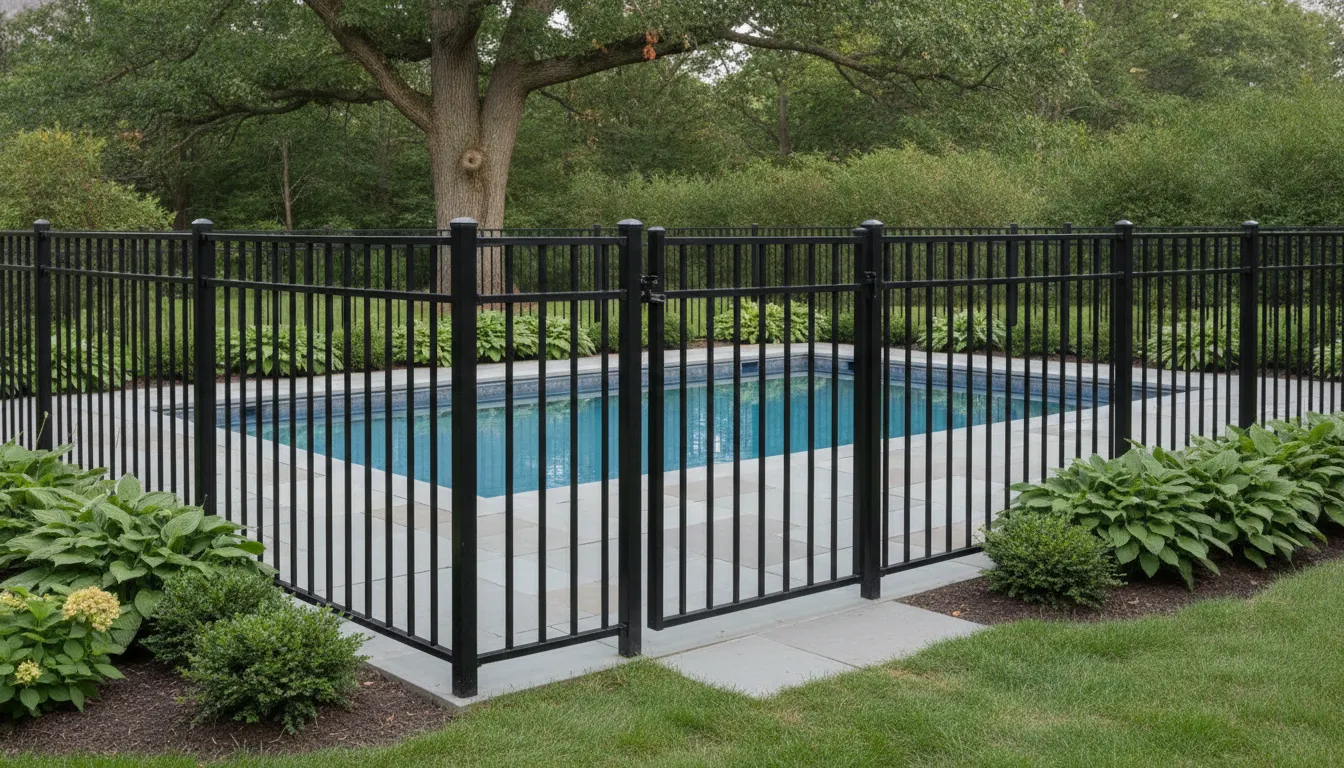
An aluminum pool enclosure can preserve visibility between the pool, patio, and home.
Advantages of aluminum around a pool
- Visibility:
Open pickets allow the pool area to remain visible from common parts of the property.
- Appearance:
Aluminum can provide a clean, architectural finish that suits both traditional and contemporary homes.
- Flexible planning:
The material can work with varied layouts, including separate pedestrian gates and transitions around patios or landscaping.
- Lower routine upkeep:
Aluminum does not require the same painting, staining, or sealing routine associated with many wood designs.
Where aluminum may not be the best fit
Open fencing does not provide meaningful privacy. If the pool sits near a road, neighboring property, or active outdoor living area, the homeowner may want a separate privacy fence elsewhere on the property. Aluminum also requires careful attention to spacing, height, grade changes, and gate hardware. A visually attractive fence is not automatically an appropriate pool barrier.
Aluminum is a strong starting point when visibility, a refined appearance, and a low-maintenance material are high priorities. Northstar can help determine whether the pool layout and surrounding features support that choice.
Vinyl Pool Fencing: Privacy and a Consistent Look
Vinyl fencing is worth considering when privacy is an important part of the pool project. Solid or semi-private panels can screen the pool from nearby properties, reduce visual distractions, and create a more enclosed outdoor setting. Vinyl can also coordinate with a home, landscape border, or existing privacy fence when the homeowner wants a consistent finished look.
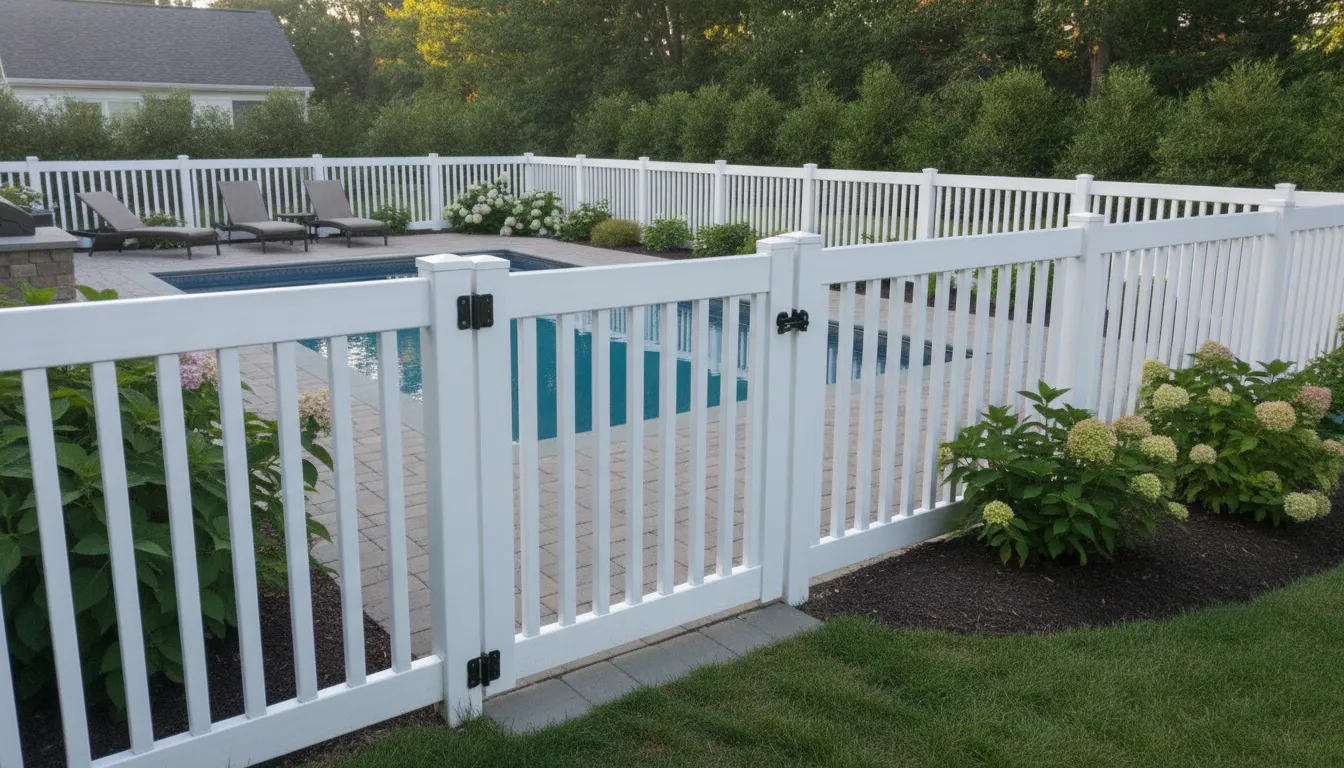
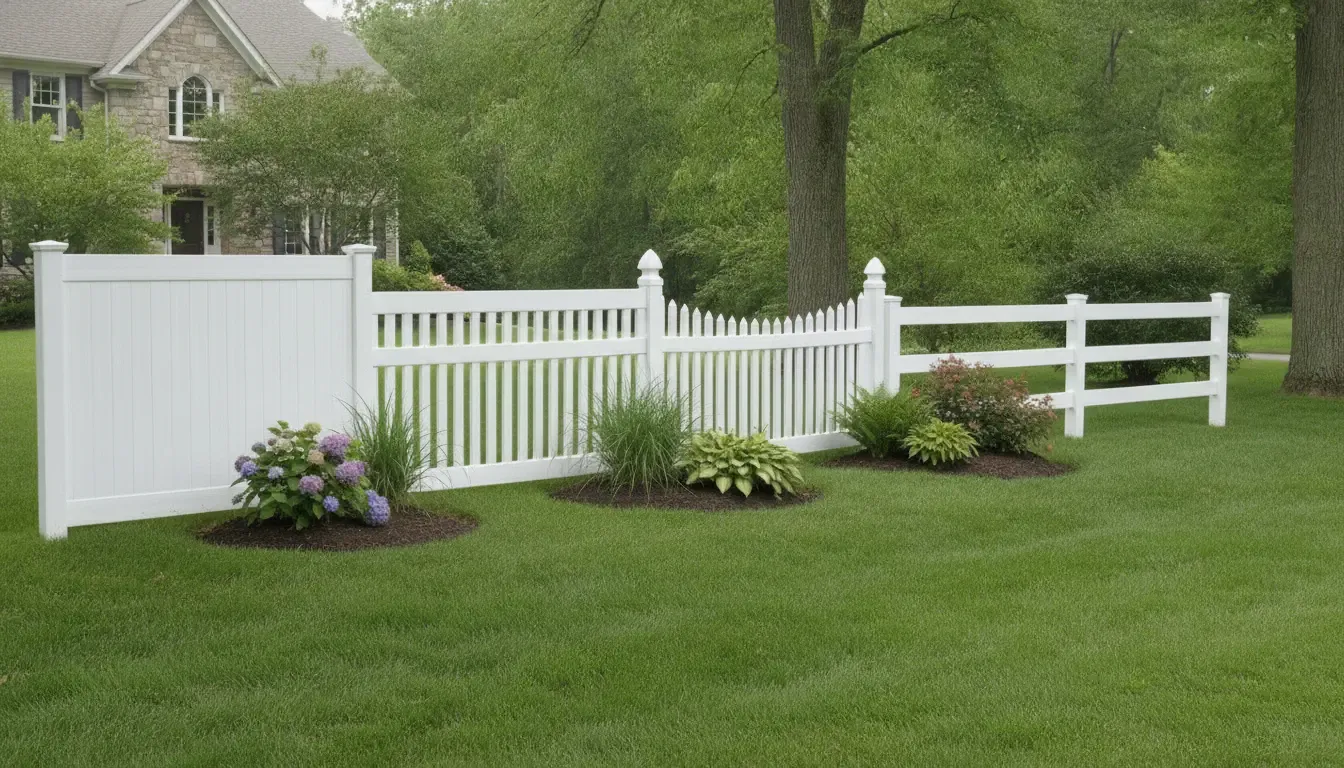
Vinyl can combine pool-area separation with a more private backyard setting.
Advantages of vinyl around a pool
- Privacy:
Panel designs can limit views into the pool area and make the yard feel more secluded.
- Clean appearance:
Vinyl offers a consistent finish that can suit a range of residential properties.
- Simple surface care:
The material is generally straightforward to clean compared with painted or stained wood.
- Design coordination:
It can work well when the pool enclosure needs to relate to other privacy fencing on the property.
What requires careful planning
Privacy is not always the same as visibility. A solid panel may make it harder to see the pool from the house, patio, or yard. Panel style and rail placement also deserve careful attention, because the design should not introduce features that conflict with the applicable barrier requirements or create unnecessary climbing opportunities.
Vinyl may be the right fit when screening and a finished, consistent appearance matter more than an open view. The property assessment should consider the location of the home, pool, neighboring yards, landscaping, and the direction from which the enclosure will be approached.
Chain-Link Pool Enclosures: Practical Coverage and Visibility
Chain-link can be a practical option for a pool enclosure when the project calls for durable boundary coverage, visibility, and a straightforward layout. It can suit larger yards, utility-oriented settings, rental properties, or projects where the enclosure needs to cover a broad perimeter without becoming visually heavy. Black vinyl-coated chain-link may offer a more finished appearance than standard galvanized mesh.
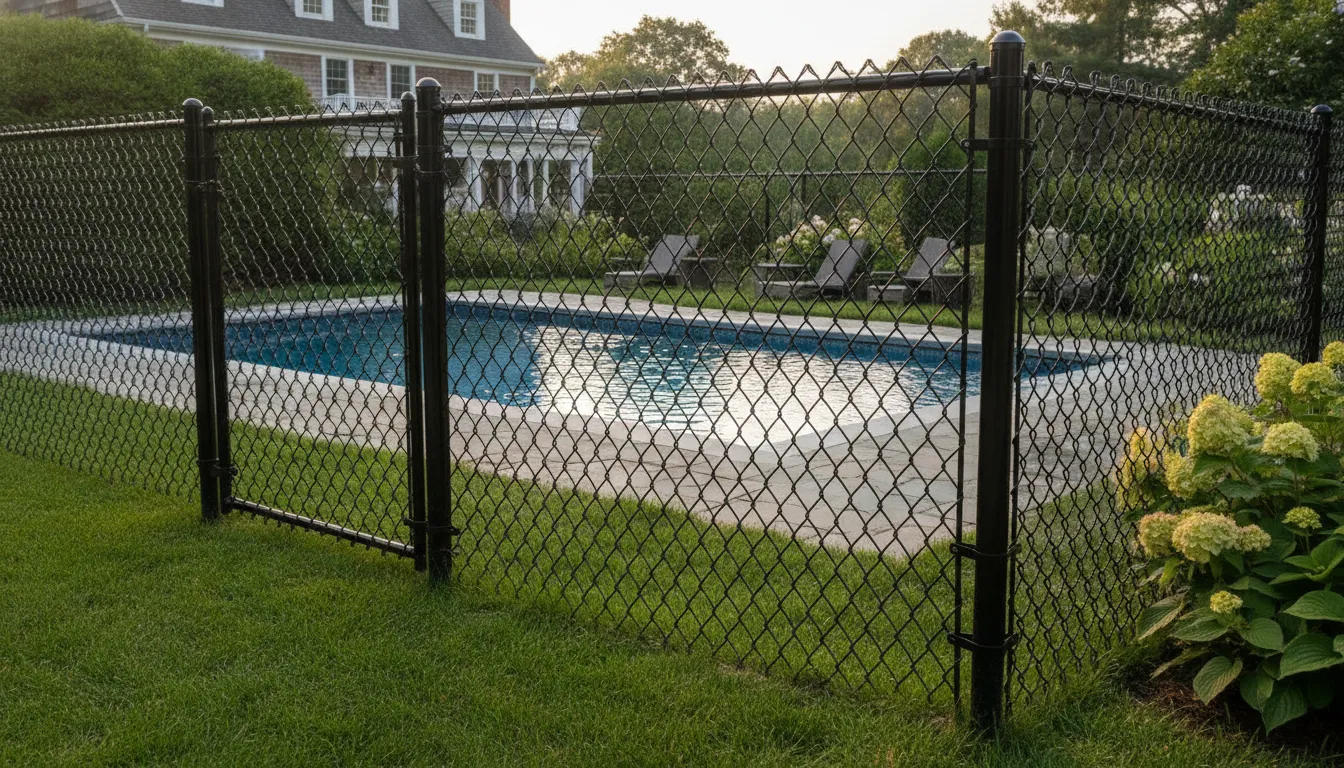
Chain-link can provide practical, visible coverage when the layout and gate are planned for the site.
Advantages of chain-link around a pool
- Functional coverage:
Chain-link can define a pool perimeter without creating a solid visual wall.
- Adaptability:
The material can be planned around larger areas and some uneven site conditions.
- Visibility:
Mesh allows the pool area to remain visible from outside the enclosure.
- Practical access:
Chain-link gates can be integrated into pedestrian or service-oriented layouts when appropriately designed.
Important tradeoffs
Chain-link has a more utilitarian character than ornamental aluminum or a coordinated vinyl design. Mesh may also require closer attention to climbing considerations, openings, and the exact requirements that apply to the property. Privacy slats can change the appearance, but they do not by themselves answer every pool-barrier question.
Chain-link can make sense when practical coverage and a visible boundary are the leading priorities. Northstar can help compare it with aluminum or vinyl based on the pool's position, the surrounding property, and the way the enclosure will be used.
Which Pool Fence Material Is Right for Your Property?
Material | Often suits homeowners who want | Main consideration |
Aluminum | Clear sightlines, a refined appearance, and a lighter visual boundary | It provides little privacy and still needs careful barrier and gate planning |
Vinyl | Privacy, a consistent finish, and separation from nearby properties | Solid panels can reduce visibility and require thoughtful design around the pool |
Chain-link | Practical coverage, visibility, and a functional perimeter | The utilitarian look and mesh details may be less appealing in some residential settings |
For many Massachusetts and Southern New Hampshire properties, the decision comes down to the balance among visibility, privacy, appearance, and site conditions. An aluminum enclosure may suit a visible pool near a landscaped patio. Vinyl may better support a private backyard. Chain-link may be practical for a larger or more functional perimeter. These are starting points, not universal answers.
The pool's location, surrounding grade, drainage, existing fence, landscaping, gates, and access route should be reviewed together. Northstar's property-planning guidance can help frame the broader conversation about how a fence relates to the home and yard. Requirements should be confirmed with the applicable municipality or authority before the enclosure is finalized.
Plan Your Pool Enclosure With Northstar Fence & Rail
Northstar Fence & Rail installs and customizes pool enclosures throughout Massachusetts and Southern New Hampshire. With more than 50 years of combined fencing and family-business experience, the team helps homeowners evaluate material, layout, access, appearance, and property conditions before moving ahead.
A consultation can help you compare aluminum, vinyl, and chain-link based on your pool, home, landscaping, privacy needs, and budget. It can also identify questions to confirm with your local building department or other authority. The goal is a pool enclosure that is thoughtfully planned for the property, not a material selected in isolation.
Comments