Commercial Security Fencing Massachusetts: Business Guide
A commercial fence does more than mark a property line. For a Massachusetts business, it can help define the perimeter, direct visitors and deliveries, protect service areas, and create a more organized first impression. The right plan begins with how the property operates, not with a fence style selected from a catalog.
Commercial security fencing massachusetts projects should balance perimeter goals, controlled access, material selection, site conditions, and coordination with the people and trades involved. A thoughtful fence plan supports the property without implying that fencing alone guarantees security.
Northstar Fence & Rail provides custom commercial installation and consultation-led planning for businesses and property professionals across Massachusetts and New Hampshire. You can explore commercial fencing in Massachusetts and consider how the property's use, appearance, access points, and long-term needs should shape the solution. The first decision is understanding which commercial fence materials fit the site and its security priorities.
Commercial Security Fencing for Massachusetts Business Properties
For a business property, fencing is more than a line around the parcel. A well-planned perimeter helps define where the property begins and ends, directs people and vehicles toward appropriate access points, and supports the way the site operates each day. Commercial property owners may be balancing security concerns with visibility, appearance, deliveries, service access, and the need to protect equipment or other valuable assets.
Commercial security fencing does not guarantee that a property will be free from unauthorized entry. Its value comes from supporting a broader property plan with clear boundaries and controlled access. The right approach depends on the site, its operating needs, and the level of privacy or visibility the owner wants to maintain. Chain-link, for example, may be considered when durable boundary delineation is a priority. While other material choices may better suit a visible frontage or a property where appearance is especially important.
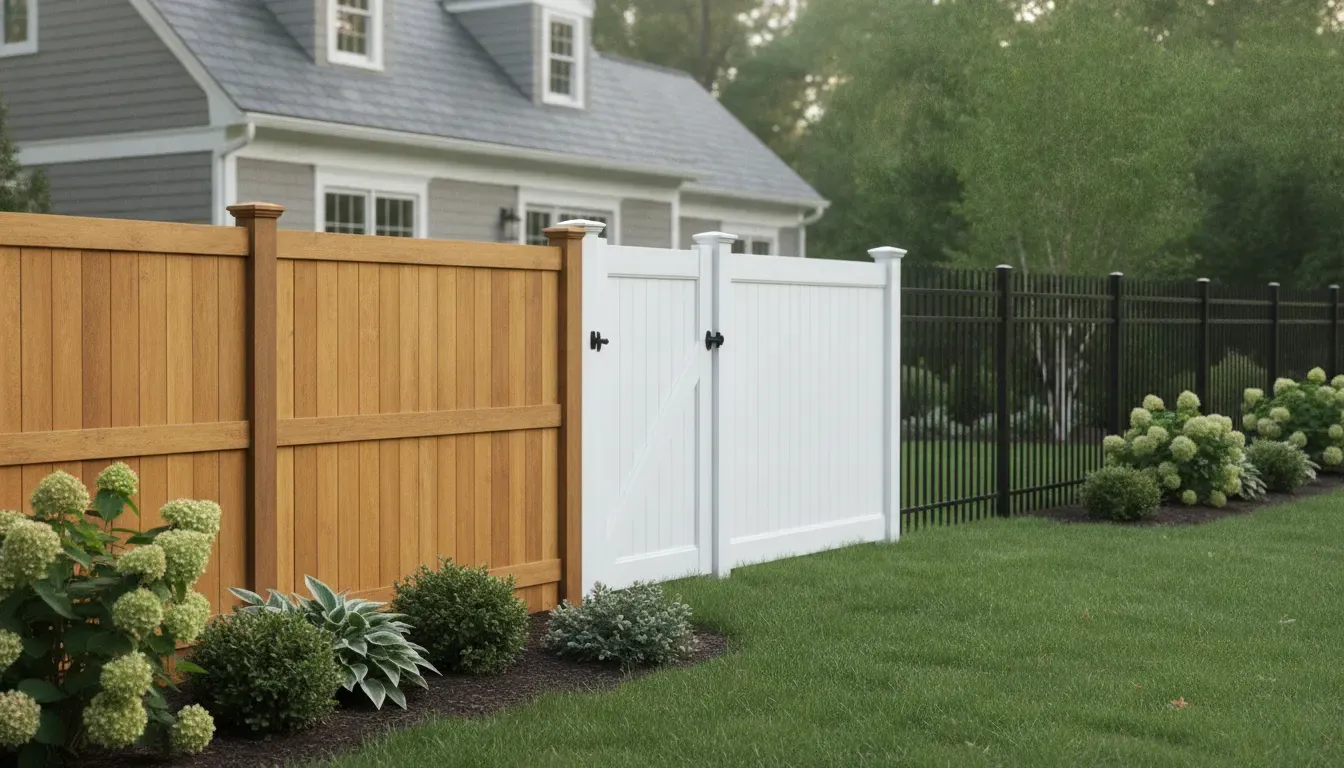
Access points deserve the same attention as the fence line. Pedestrian gates, service entrances, delivery areas, and vehicle access should be considered together so the completed perimeter works with normal traffic patterns. A gate that is poorly placed or difficult to use can create operational friction, even when the surrounding fence is appropriate. Custom gates can serve as functional and aesthetic access points within a commercial installation. But their placement and operation should reflect the property rather than follow a one-size-fits-all layout.
Property definition can be especially useful where a business shares a larger campus, borders a public way, or includes separate parking, storage, and service areas. A thoughtfully located perimeter can clarify which spaces belong to the business and which areas require authorized access while preserving appropriate sightlines at entrances and along public-facing portions of the property. These decisions should support daily operations rather than make routine movement unnecessarily difficult.
Durability also means more than selecting a material described as strong. Massachusetts properties can present different terrain, existing conditions, and ground conditions from one site to another. A commercial plan should account for those conditions, along with perimeter goals, access points, staging, utility locating, permitting, and coordination with other work taking place on the property. Municipal requirements may vary, so the project team should confirm applicable requirements with the relevant local authority before work begins. The Massachusetts State Building Code information is a starting point for code context, not a substitute for confirming requirements with the applicable municipality.
Property managers often need dependable communication as much as they need a suitable fence. They may be coordinating tenant activity, recurring maintenance, contractors, or multiple business locations. Northstar Fence & Rail provides commercial fencing in Massachusetts with a consultation-led approach that considers the property, the intended use, and the project scope. That planning helps business owners and property managers evaluate practical options while keeping quality workmanship and clear coordination in view. CISA's physical security resources likewise frame physical security as a broader, risk-based planning process rather than a single product decision.
Which Commercial Fence Materials Fit a Security-Focused Property?
Material selection should begin with the property's actual priorities, not with a single definition of security. A warehouse may need clear boundary delineation and visibility around a broad perimeter. An office, multifamily property, or customer-facing business may place more weight on appearance and controlled access. Northstar Fence & Rail identifies wood, vinyl, chain-link, and aluminum as core material categories, with the right choice guided by the property, site conditions, and security needs.
Material | Common fit | Advantages | Tradeoffs and maintenance | Visibility and appearance |
Chain-link | Large commercial boundaries, service yards, utility areas, and properties where practical delineation is central. | Durable, security-focused, and well suited to defining a perimeter across a commercial property. | Offers less visual privacy than a solid fence. The property owner should plan for condition checks and address damage or wear as part of ongoing site care. | Open visibility supports observation across and beyond the boundary. Its utilitarian appearance may be less aligned with a highly designed frontage. |
Aluminum | Office properties, commercial frontage, multifamily settings, and sites where a finished appearance matters alongside boundary definition. | Can provide a more architectural look while maintaining an open visual relationship with the property. | Open designs do not provide full screening. Layout, site exposure, and the intended use of the property should guide the selection. | Typically supports visibility and a refined, open appearance. The style should be coordinated with buildings, landscaping, and entry points. |
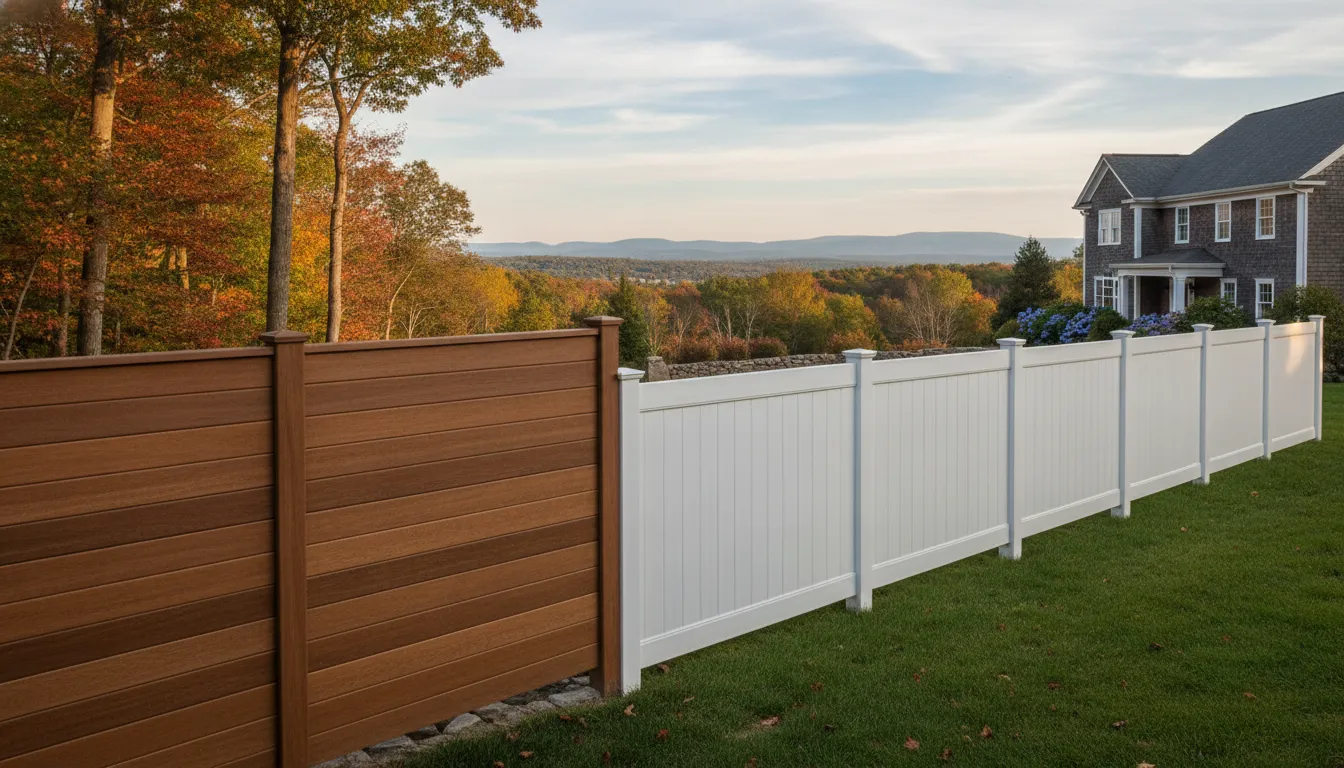
Vinyl | Business or multifamily properties that want a clean, more private boundary and a consistent finished look. | Solid configurations can create visual separation and help define areas where privacy is part of the property's goals. | Solid panels reduce visibility, so they may not be appropriate where staff need to observe activity outside the fence. Surface cleaning and inspection remain important. | Usually presents a uniform, finished appearance. Privacy depends on the selected layout and should be balanced against visibility needs. |
Wood | Commercial properties seeking a traditional, natural appearance or a more substantial visual boundary. | Offers design flexibility and can support privacy or property definition when the layout is selected for that purpose. | Requires attention to the material's condition over time. Exposure, moisture, landscaping, and use of the property can affect maintenance needs. | Can create a warmer, more private appearance than an open fence. It may be a strong fit for customer-facing properties where character matters. |
Chain-link is specifically positioned as a durable, security-focused option for commercial boundary delineation. That does not mean it is automatically the best choice for every security-minded property. A fence is one part of a broader site plan, and its effectiveness depends on the perimeter goals, gates, access points, terrain, existing conditions, and daily operations.
For a property in Massachusetts, local ground conditions and the relationship between the fence, building frontage, parking, loading areas, and service zones should also be considered. A material that looks appropriate on a concept plan may need a different configuration after the site is assessed. A qualified contractor can help compare visibility, appearance, maintenance expectations, and access needs before the final material and gate plan are selected.
How Should a Massachusetts Business Plan Its Perimeter Fence?
A commercial perimeter fence should be planned around how the property operates, not simply where the boundary appears on a survey. Begin by defining the primary objectives. A business may need clearer property definition, controlled access, a durable boundary, or a more security-minded perimeter. Those goals influence the fence material, gate locations, visibility, and the way the installation fits into daily operations. A commercial fencing plan should account for perimeter goals, access points, terrain, existing conditions, utilities, permitting, staging, and coordination with other trades.
Map the areas that affect daily operations
Frontage deserves early attention because it is the part of the property most visible to customers, neighbors, and passing traffic. The fence should support the property's appearance while maintaining a clear and practical boundary. Service areas and loading zones require a different review. Delivery vehicles may need wider approaches, and gates should be placed so they do not interfere with turning movements, dumpsters, fire lanes, parking circulation, or employee access.
Also identify equipment yards, mechanical areas, storage zones, pedestrian entrances, and any portion of the site that must remain accessible during business hours. Existing drives, retaining features, pavement, landscaping, walls, and older fence sections can all affect layout and installation sequencing. Documenting these conditions early helps the property owner, manager, contractor, and fencing team work from the same plan.
Account for Massachusetts site conditions
Massachusetts properties can present different combinations of slopes, ledge, dense or disturbed soil, drainage concerns, and limited equipment access. Frost depth and freeze-thaw cycles may also affect how a fence project is evaluated, but their relevance depends on the specific site and installation conditions. A qualified contractor should assess the ground rather than assume that one approach applies across the state.
Utility locating should be completed before digging, and the project team should confirm which local requirements apply to the property. Municipal permitting rules can vary among Massachusetts communities, so a business should check with the applicable municipality instead of relying on a statewide assumption. The same early review should address construction access, material staging, temporary routes, and coordination with paving, concrete, landscaping, electrical, or building work.
Thoughtful perimeter planning gives a commercial fence a better chance of fitting the property both physically and operationally. Northstar Fence & Rail provides property assessment, solution selection, project planning, and recommendations through a free, no-obligation consultation, with commercial fencing tailored to the site's needs.
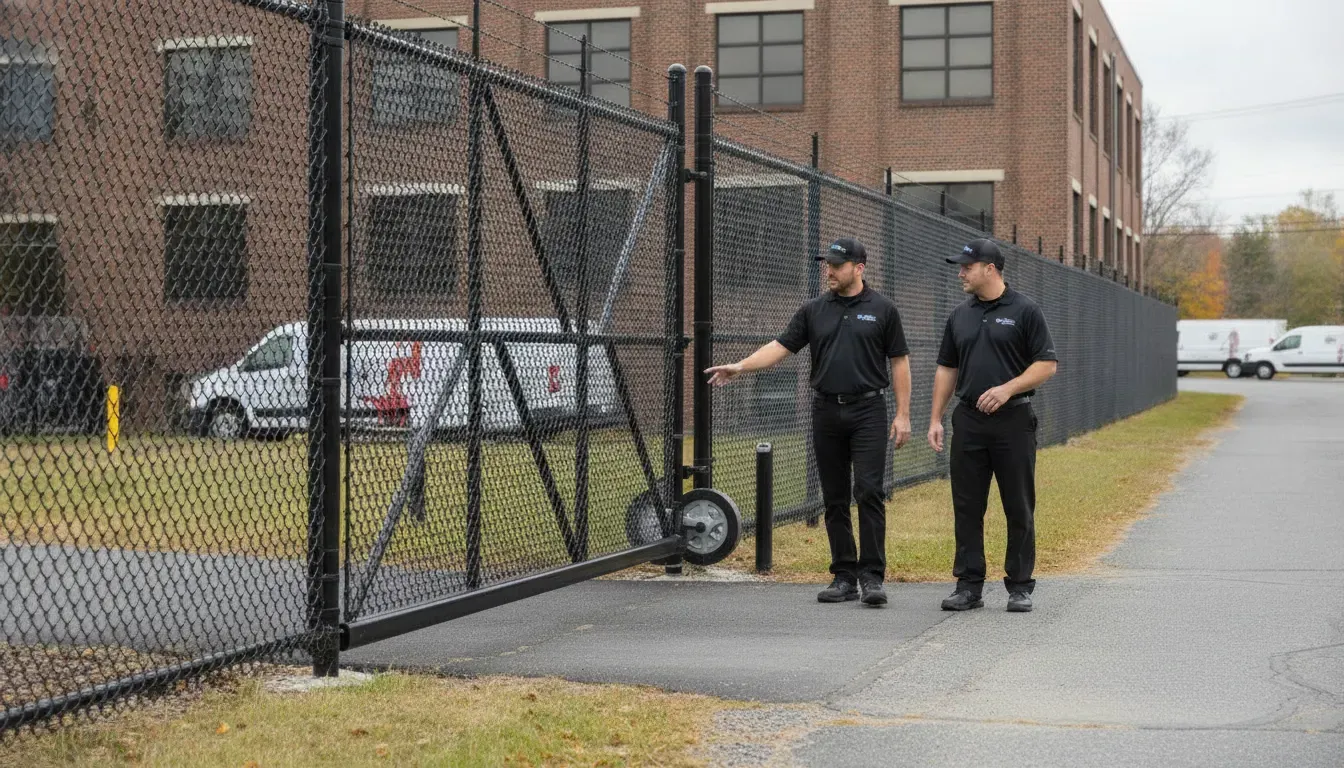
A site review helps connect the fence layout to daily business access and property conditions.
What Should Commercial Gates and Access Points Accomplish?
A commercial gate should support the way people, vehicles, and service activity move through a property without creating avoidable conflicts. That starts with understanding the site before selecting a gate style. A custom gate can become both a functional and aesthetic access point within a commercial fence installation. But its success depends on how well it fits the property, daily operations, and surrounding conditions.
Separate pedestrian, service, and vehicle access
Begin by identifying who needs to pass through each opening. Employees and visitors may need a convenient pedestrian entrance near a primary walkway. Maintenance teams may need a separate service gate for equipment, waste removal, or routine property care. Delivery vehicles and larger commercial vehicles require a different review of turning movements, approach angles, and available clearance.
These access points do not necessarily need the same location, width, or operating pattern. Keeping pedestrian traffic distinct from delivery activity may help the property function more smoothly. A property manager, builder, or business owner should also consider occasional needs, such as emergency access, seasonal operations, loading activity, and future changes to the site.
Plan placement and clearances around real site use
Gate placement should account for buildings, drive aisles, parking areas, loading zones, sidewalks, slopes, retaining features, and existing fence lines. The opening needs enough practical clearance for the intended users, while the gate path should not interfere with normal circulation or neighboring improvements. A plan that looks workable on a drawing may require adjustment when terrain, pavement, landscaping, or existing structures are reviewed in the field.
Operation is another planning question. The project team should discuss how often the gate will be used, who will operate it, and whether the selected design is appropriate for the property's day-to-day demands. This does not mean assuming a particular electronic system or promising a specific security outcome. It means matching the gate, hardware, clearances, and access arrangement to documented project needs.
Account for conditions and coordination
Commercial gate planning is part of the wider fence plan. Terrain, existing conditions, staging, utility locating, permitting, and coordination with other trades can all affect the final layout. Massachusetts properties may also present site-specific ground conditions, frost depth, or freeze-thaw considerations that deserve review rather than a one-size-fits-all assumption.
Northstar Fence & Rail evaluates access points, operation, site conditions, and project needs as part of commercial gate planning. Discussing these details early helps the fencing scope align with the property and the broader project team, from initial layout through installation coordination.
How Do Commercial Fence Projects Stay Coordinated?
Commercial fencing rarely happens in isolation. A property manager may be balancing tenant access, deliveries, parking, maintenance, and safety while a builder coordinates several trades on the same site. The fencing plan should account for those realities from the beginning, rather than treating the fence as a final detail.
That starts with a clear site review. The project team should identify the perimeter goals, proposed gate locations, service and delivery access, terrain, existing improvements, and areas that must remain available during construction. On an active business or multifamily property, staging areas and temporary access routes also deserve attention. A capable fencing partner can help identify conflicts before materials arrive or digging begins.
Confirm utilities, permits, and site conditions early
Utility locating is required before digging, and many Massachusetts and New Hampshire municipalities may require permits for fencing work. Requirements can vary by municipality, property type, location, and project scope, so the owner, contractor, and fencing partner should confirm the applicable process with the local authority and project team. This early check can prevent a planned fence line or gate opening from conflicting with underground utilities, setbacks, drainage features, or other site constraints.
New England ground conditions also call for site-specific planning. Frost depth, freeze-thaw cycles, seasonal limitations, rock, and changing soil conditions can affect how a fence project is approached. The relevant question is not whether one method works everywhere, but what the property requires based on its existing conditions and intended use.
Sequence the work around other trades
Fence installation may need to follow grading, paving, utility work, or other construction activities, while still preserving practical access for workers, residents, customers, and emergency needs. A shared schedule and clearly identified points of contact help the fencing contractor coordinate deliveries, layout decisions, gate access, and any changes to the work area. Regular communication is especially important when the site plan changes after the original fence scope was discussed.
For general contractors and builders, a fencing subcontractor can become a valuable part of that coordination process. Northstar works with property managers, contractors, and builders through Northstar partnerships, supporting commercial and multifamily project needs. The goal is a well-planned installation that fits the property, the access requirements, and the broader construction sequence. With clear communication and an informed site assessment, commercial fence planning becomes a coordinated project decision instead of an avoidable source of delay or conflict.
How to Choose a Commercial Fence Contractor in Massachusetts
Choosing a commercial fence contractor is about more than comparing material names or reviewing a gallery of completed work. The right partner should understand how a fence supports your property's boundaries, access patterns, appearance, and day-to-day operations. Look for a company with documented experience serving businesses, contractors, and property managers, and ask how it approaches projects with different scopes and site conditions.
Look for relevant commercial experience
Commercial work can involve active businesses, multifamily properties, construction sites, loading areas, parking lots, and shared access routes. Ask whether the contractor has experience coordinating around those conditions and whether the team can communicate clearly with property managers, builders, and other trades. Experience should be relevant to your project, not simply described with broad labels.
Expect guidance, not a one-size-fits-all material
A knowledgeable contractor should connect material recommendations to the property's style, security needs, terrain, existing conditions, and project scope. Chain-link may suit a security-focused commercial boundary, while aluminum, vinyl, or wood may be more appropriate where appearance, screening, or property character carries greater weight. The important point is not selecting a material from a generic list. It is understanding the tradeoffs before the scope is finalized.
Review the site and plan the gates
A useful assessment should consider the perimeter, service areas, pedestrian routes, deliveries, vehicle access, terrain, and existing structures. Gates deserve the same attention as the fence itself. Their location, clearances, intended use, and relationship to the surrounding ground conditions should be discussed early so access points fit the way the property operates.
Require a clear written scope
Before work begins, the written scope should make the planned material, fence locations, gate requirements, site assumptions, coordination responsibilities, and relevant project conditions easy to understand. Massachusetts projects may also require local permitting or utility coordination, so confirm responsibilities with the contractor, project team, and applicable municipality rather than assuming every town follows the same process.
Northstar Fence & Rail serves businesses, contractors, and property managers in Massachusetts and New Hampshire. Its free consultation includes solution selection, property assessment, project planning, and recommendations. Learn more about Northstar's commercial fencing team and look for the same combination of clear communication, practical planning, and the brand promise, Exceptional Service. Expert Craftsmanship.
Frequently Asked Questions
Which fence material is best for a Massachusetts commercial property?
There is no single best material for every business property. Chain-link is often considered for durable boundary delineation and security-focused commercial applications. Aluminum, vinyl, and wood may be better fits when appearance, privacy, visibility, or property character carries more weight. The right choice depends on the site, perimeter goals, access needs, and the level of maintenance the property team wants to manage.
What should a commercial gate plan include?
A gate plan should account for who needs access, where vehicles and deliveries move, required clearances, pedestrian routes, operating space, and how the gate fits the fence line. Site conditions and existing circulation also matter. A commercial gate should be planned as a functional access point, not treated as an afterthought added after the perimeter is designed.
Are permits required for commercial fencing in Massachusetts?
Permit requirements can vary by municipality and by project conditions. Many Massachusetts municipalities may require permits, and utility locating is required before digging. Confirm the applicable requirements with the local authority and project team before work begins. Northstar's planning process can help identify permitting and site-coordination questions early, but it should not replace the municipality's guidance.
How does a contractor assess a commercial fencing site?
A useful assessment reviews the property boundary, terrain, existing conditions, gates, service and loading areas, utilities, staging needs, and coordination with other trades. Massachusetts sites may also require careful consideration of ground conditions, frost depth, and freeze-thaw cycles. These factors help shape a practical scope and material recommendation without assuming that every property has the same conditions.
Ready to Plan Your Commercial Fence?
A thoughtful site review can help align perimeter goals, materials, gates, and project coordination with the needs of your Massachusetts property. Call Northstar Fence & Rail at (603) 453-3698 to request a free, no-obligation consultation and discuss your commercial fencing project.

Comments