Composite vs Vinyl Fence New England Guide
Choosing a fence in New England is about more than comparing sample colors. Seasonal moisture, freeze-thaw conditions, sun exposure, drainage, privacy goals, and the character of the property can all influence how a material looks and performs over time.
For homeowners weighing composite vs vinyl fence new england options, composite may offer a more wood-like appearance, while vinyl often provides a clean, consistent look with straightforward upkeep. Neither material is automatically the better choice for every property. Product formulation, installation planning, exposure, and site conditions matter.
The right decision starts with understanding what each material is made to do. How its appearance changes with weathering, and how it fits your priorities for privacy, maintenance, gates, and long-term property style. Northstar Fence & Rail serves Massachusetts and New Hampshire with custom fencing and consultation-led planning. First, it helps to clarify the fundamental difference between composite and vinyl fencing.
How Should You Compare a Composite vs Vinyl Fence in New England?
Composite and vinyl are both manufactured fencing categories, but they are not interchangeable materials. Composite fencing is commonly described as a blend of wood fibers and plastic, although the exact formulation, surface treatment, colors, and construction can vary by product. Vinyl fencing generally refers to fencing made with PVC-based components, with performance influenced by the formulation, additives, profile, and installation system. In other words, the category name is only the starting point. The actual product and the property where it will be installed matter.
How composite and vinyl look different
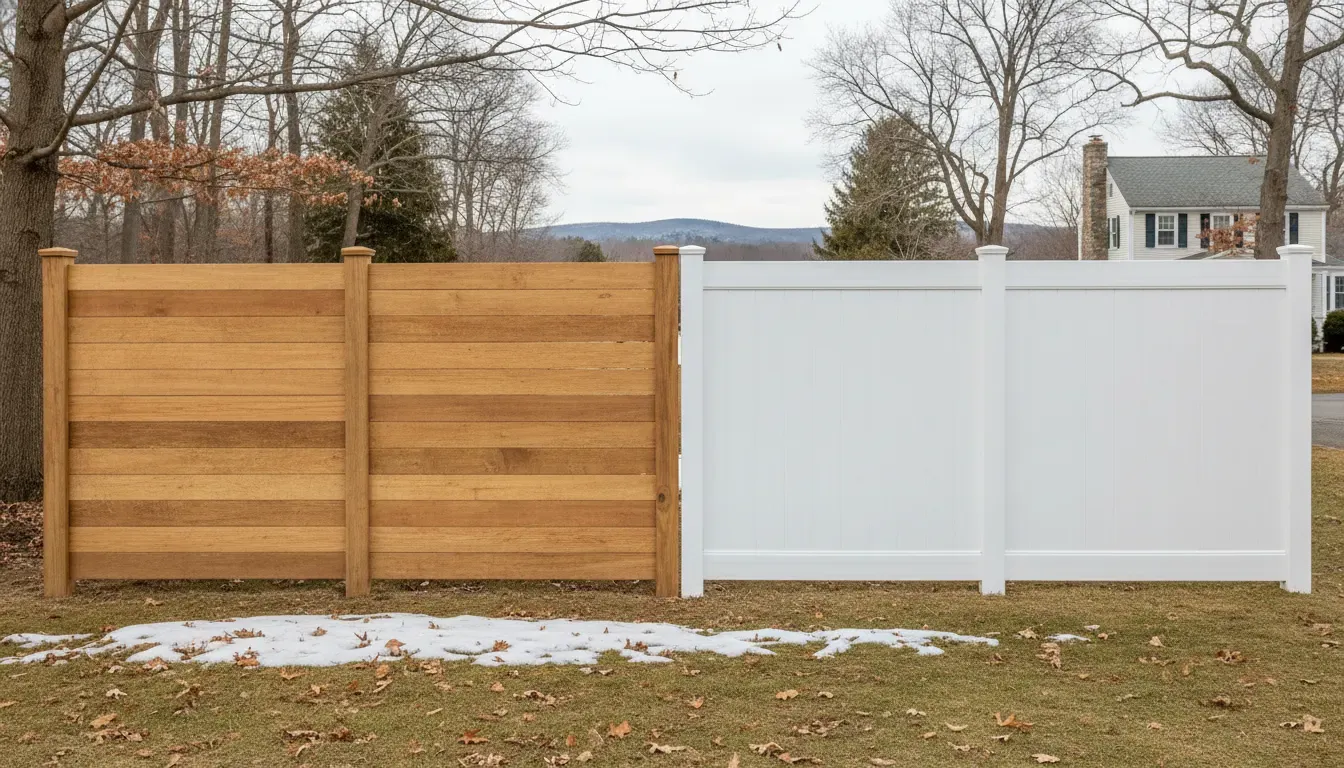
Composite products are often selected when a homeowner wants a more wood-like visual character. Depending on the product, that may include textured surfaces, varied color, or a substantial appearance that works well with traditional and contemporary homes. Vinyl typically offers a cleaner, more consistent appearance, which can be a strong fit for privacy fencing, pool-area boundaries, or properties where a uniform finish is preferred.
Neither description guarantees one material will look better on every property. A fence should relate to the home's architecture, surrounding landscape, desired privacy, and the way the boundary will be viewed from the street or yard. A highly uniform fence may suit a formal property, while a more textured appearance may complement a wooded New England lot or an older home. Homeowners considering classic New England fence styles may also want to compare a more open design. Post-and-rail fencing can be worth considering instead of assuming a solid fence is the only option.
What the practical differences mean
Maintenance expectations, weathering, impact resistance, color retention, and repair options depend on the specific product, not simply on whether the label says composite or vinyl. Research on vinyl weathering shows that outdoor exposure, including sun, rain, wind, heat, and pollutants, can affect durability and appearance. Studies also note that PVC formulation and additives influence how products respond over time. Composite fencing likewise varies, and long-term outdoor weathering has been studied for wood-plastic composites rather than treated as a single universal material.
For a Massachusetts or Southern New Hampshire property, the better comparison starts with the project goal. Consider privacy, curb appeal, pets or children, gates, access, drainage, grade, and exposure before focusing on the material label. Northstar Fence & Rail provides custom residential and commercial fencing, including vinyl, and can help evaluate the actual product and site conditions during a consultation. That approach creates a more useful answer than declaring composite or vinyl the universal winner.
How Do Composite and Vinyl Compare for Appearance Longevity?
Appearance longevity is less about choosing a universal winner and more about deciding which visual character suits the home, landscape, and level of upkeep you expect. Composite fencing is often selected for a wood-like surface and a more textured, substantial presence. Vinyl fencing generally offers a cleaner, more consistent finish, with coordinated profiles and colors that can keep a property looking orderly from one section to the next.
That distinction matters in New England settings. A composite appearance may complement a traditional home, wooded lot, or landscape designed around natural textures. It can also feel appropriate where the fence should read as a strong architectural element rather than a simple boundary. Vinyl may be a better visual fit for homeowners who prefer crisp lines, a uniform finish. And a lighter-looking enclosure around a garden, pool area, side yard, or newer home. Neither approach automatically suits every property.
Color deserves close attention. Sun exposure, surrounding surfaces, and the selected formulation can influence how a manufactured fence looks over time. Research on vinyl weathering has examined color and gloss retention, while broader studies note that outdoor exposure includes sun, heat, rain, wind, dust, and pollutants. PVC weathering can also involve discoloration known as chalking, particularly in some darker-colored products. These findings describe material behavior and testing, not a guarantee about any specific fence product. Product formulation, installation, exposure, and maintenance all matter.
Composite products also vary in their blend, surface texture, and color treatment, so samples should be viewed in the actual context of the property when possible. Look at the fence beside the siding, trim, stonework, decking, plantings, and neighboring boundaries. A color that appears attractive in isolation may feel too stark beside an older home or disappear against dense landscaping. Conversely, a textured finish may add welcome depth but compete with an already busy exterior.
For additional context on how fencing style relates to homes and landscapes, see Northstar's classic New England fence styles guide. Northstar helps Massachusetts and Southern New Hampshire property owners weigh appearance, site conditions, privacy, security, and maintenance expectations together, rather than selecting a material from a sample alone.
How Do They Perform in New England Weather?
Massachusetts and Southern New Hampshire properties can place very different demands on a fence. A sheltered, level yard does not experience the same wind, runoff, freeze-thaw movement, rocky ground, or access constraints as an exposed hillside, wooded lot, or low-lying property. That is why a material label alone cannot guarantee how a particular composite or vinyl fence will perform.
Cold weather matters, but the surrounding site and the quality of the system matter just as much. Posts must be planned for the ground they enter, including grade changes, ledge, drainage, and areas where soil may shift. Poor drainage can leave water around posts or create movement in the surrounding ground. Heavy snow, falling branches, lawn equipment, and other impacts can also affect panels, rails, posts, and gates. A fence that looks suitable on a product page may need a different layout or support strategy once access and site conditions are considered.
Wet-weather exposure deserves a realistic conversation about the product itself. Research on vinyl siding, which is not the same as vinyl fencing, shows that sun, heat, rain, wind, dust. And pollutants can affect outdoor durability, while weathering research on PVC identifies discoloration and changing mechanical properties as formulation-dependent concerns. These findings are useful context, not fence-specific predictions. Product formulation, color, profile, hardware, installation details, and exposure all influence the result. Composite products also vary in their wood-fiber and polymer blends, surface treatments, and manufacturer specifications.
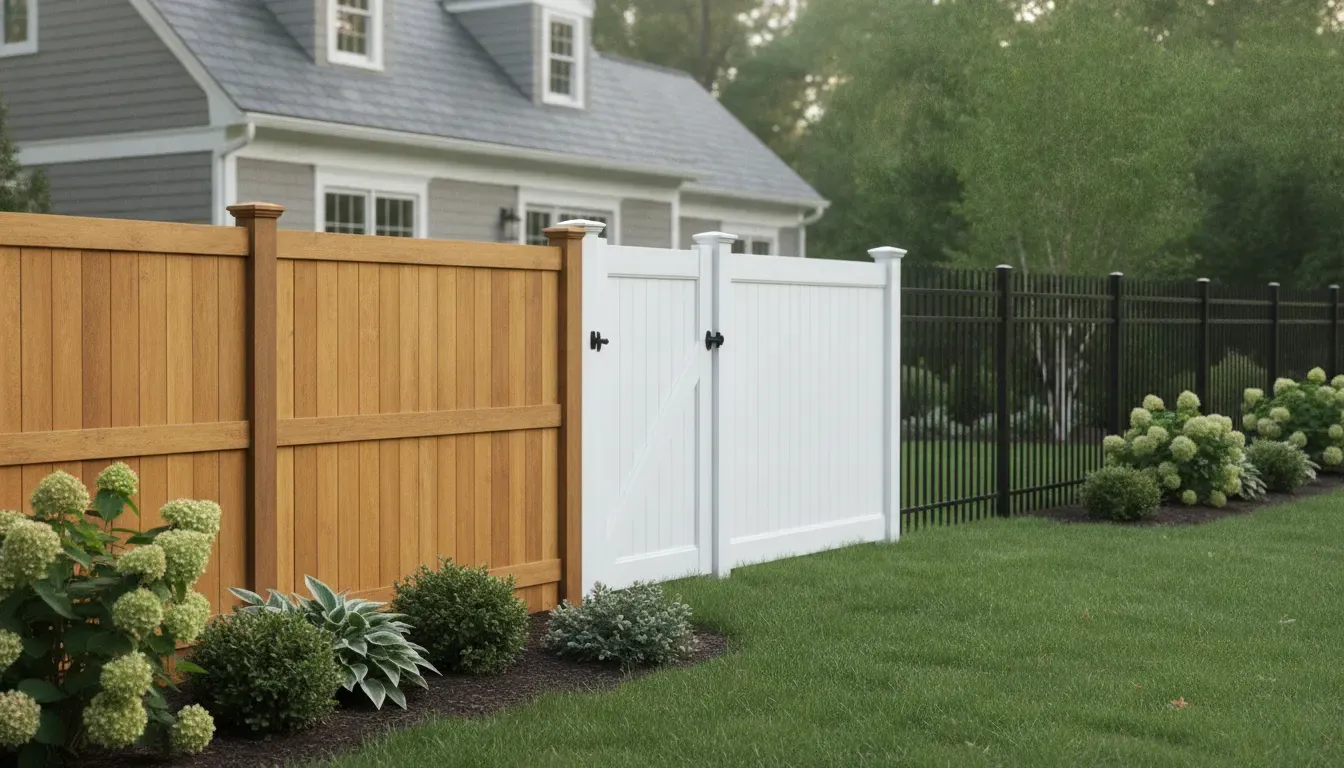
Gates deserve particular attention in New England. Their weight, hinges, latches, clearances, and post support must work together through seasonal changes. A gate may operate reliably in one location and require a different approach where the entrance is exposed, the grade changes, or drainage is poor. Northstar assesses the property, access, ground conditions, and intended use before recommending a direction rather than treating every site as interchangeable.
Northstar Fence & Rail provides custom residential and commercial fencing, including vinyl fencing and gates, across Massachusetts and New Hampshire. A consultation can help weigh privacy, appearance, impact exposure, maintenance expectations, and the practical realities of the property before a material decision is made.
Which Material Is Easier to Maintain?
Both materials can reduce the routine upkeep associated with painted wood, but easier maintenance does not mean maintenance-free ownership. The right choice depends on the product formulation, the fence's exposure, drainage around the posts, nearby vegetation, and how gates and hardware are used.
Consideration | Composite fencing | Vinyl fencing |
Routine cleaning | Usually focused on removing dirt, pollen, organic growth, and other surface buildup. The recommended method depends on the product. | Often involves periodic washing to remove dirt and organic buildup. Follow the manufacturer's care guidance for the specific system. |
Finish expectations | Color and surface texture can vary by formulation. Weathering should be evaluated based on the selected product rather than assumed from the material name. | Color and gloss retention are established weathering considerations. PVC weathering can also produce chalking or discoloration, particularly in some darker products. |
Inspection | Inspect panels, posts, connections, and areas exposed to moisture or impact. Look for movement, staining, damage, or changes around the grade. | Inspect panels, posts, connections, and exposed edges for cracking, impact damage, movement, or weather-related changes. |
Gates and hardware | Hinges, latches, posts, and alignment still need attention. Frequent use and ground movement can affect operation regardless of infill material. | Hardware and gate alignment require the same practical attention. A lightweight appearance does not remove the need for sound planning and support. |
Weathering and variability | Composite formulations differ, and long-term outdoor weathering depends on the product's makeup and site exposure. | Sun, heat, rain, wind, dust, and pollutants can affect vinyl over time. Research from NIST shows why formulation and exposure matter. |
In practice, the maintenance difference is often less about a universal winner and more about choosing a suitable product and planning the installation correctly. A shaded, damp section beside a wooded property may need closer observation than a well-drained, open section, regardless of the material. Gates deserve particular attention because hinges, latches, posts, soil movement, and repeated use can create service needs before the fence infill shows visible weathering.
For Massachusetts and Southern New Hampshire properties, Northstar Fence & Rail can help weigh maintenance expectations alongside privacy, appearance, security, access, and site conditions. The company offers vinyl fencing and custom residential and commercial fencing, with material recommendations shaped around the property rather than a blanket claim about performance.
How Should You Choose a Fence for Your Property?
- Start with the property's purpose.
Decide what the fence needs to accomplish before comparing materials. Privacy, pool or pet boundaries, child safety, security, property lines, and visual screening can point toward different layouts and levels of openness. A fence for a back garden may have different requirements from one serving a commercial boundary or a driveway entrance.
Define the appearance you want to live with.
Consider whether you prefer a consistent manufactured finish, a more textured or wood-like character, an open view, or a stronger visual boundary. The surrounding architecture, landscape, and neighborhood context matter. If a traditional New England look is important, reviewing
classic New England fence styles
can help clarify how the fence should relate to the property rather than stand apart from it.
- Evaluate the site, not just a sample.
Grade changes, drainage, soil, ledge, wooded areas, exposure, access for equipment, and nearby structures can affect planning. Massachusetts and Southern New Hampshire properties vary considerably, and New England weather conditions can add planning considerations. Neither composite nor vinyl is a universal winner without understanding the setting.
- Be honest about maintenance expectations.
Compare how much cleaning, inspection, and ongoing attention you are prepared to provide. Product formulation, color, exposure, and installation details can influence how a fence weathers, so broad material claims should not replace a property-specific assessment.
- Plan gates and access at the same time.
Walk through how people, vehicles, pets, and maintenance equipment will use the property. Gate size, placement, slope, operating space, and the relationship between the gate and fence should be considered together. A well-chosen fence can still be inconvenient if access was treated as an afterthought.
- Check current local requirements.
Fence, boundary, pool, and permitting requirements may vary by municipality. Confirm the rules that apply to your Massachusetts or New Hampshire property with the relevant local authority rather than relying on a statewide assumption.
Discuss the decision with a fencing professional.
Northstar Fence & Rail offers custom residential and commercial fencing, including vinyl fencing, and provides a free, no-obligation consultation. A conversation about your goals, site conditions, appearance, gates, and maintenance expectations can help narrow the options responsibly. Visit
to discuss the right direction for your property.
Frequently Asked Questions
Are composite fences better than vinyl?
Neither material is better for every New England property. Composite may suit homeowners who want a more textured, wood-like appearance, while vinyl can be a strong fit for a clean, consistent look and straightforward upkeep. The right choice depends on privacy goals, property style, exposure, drainage, gates, and how much variation in appearance you prefer over time.
Which material keeps its appearance longer?
Appearance longevity depends on the specific product, color, exposure, and installation conditions. Composite and vinyl can both weather outdoors, so compare how each option handles sunlight, moisture, impact, and seasonal changes rather than relying on a universal lifespan claim. A site review can also help determine which color, profile, and fence layout will remain appropriate for the property.
Is composite or vinyl fencing easier to maintain?
Both options are generally selected when homeowners want less routine finish maintenance than wood. Vinyl typically offers a simple, consistent surface to clean, while composite may have a more varied surface and product-specific care expectations. Ask about cleaning, inspection, and repair considerations before choosing, especially if the fence will be exposed to mud, standing moisture, or heavy use.
How does New England weather affect the decision?
Cold, wet weather, freeze-thaw movement, snow, wind, drainage, soil, and sun exposure can all affect fence performance. The material is only part of the decision. Grade changes, access, post placement, gate operation. And site drainage should be evaluated together so the design fits the property instead of assuming one material will perform the same way everywhere.
Can Northstar help me compare composite and vinyl fencing?
Yes. Northstar Fence & Rail provides consultations for Massachusetts and New Hampshire homeowners and can discuss fencing options around appearance, privacy, security, maintenance, and site conditions. Northstar offers vinyl fencing along with wood, aluminum, and chain-link options; composite availability should be confirmed for your specific project. A free, no-obligation consultation can help clarify the best path.
Ready to Compare Fence Materials for Your Property?
The right choice depends on more than appearance. Your privacy goals, maintenance preferences, drainage, grade, exposure, and gate plans all affect how composite or vinyl fencing may fit a Massachusetts or Southern New Hampshire property. Northstar Fence & Rail can help you compare those considerations and plan a solution suited to your home. Call (603) 453-3698 to request a free, no-obligation consultation.
Comments