HOA Fence Rules in Massachusetts: What Homeowners Should Check
Understanding HOA fence rules in Massachusetts is an important first step before choosing a fence for a home in a planned community, condominium association, or neighborhood with recorded restrictions. The details can affect permitted locations, heights, materials, colors, screening, and the approval process. Because community documents and local requirements differ, confirm both before committing to a design.
What do HOA fence rules usually cover?
An association may set standards for exterior changes to maintain a consistent appearance or protect shared interests. A fence is a visible property improvement, so an HOA or architectural review committee may ask to review its location and design before work begins. The exact authority and process depend on the community's governing documents; there is no single set of fence rules that applies to every Massachusetts HOA.
Look for language about fences, walls, enclosures, landscaping, exterior alterations, and architectural approval. Requirements may appear in more than one document, such as a declaration, bylaws, rules and regulations, or design guidelines. Check for amendments and current application forms, too. An older copy or an informal summary may not reflect the association's current process.
Common review topics include:
- Location:
Whether a fence may sit along a front, side, or rear property line, and how it should relate to easements or shared areas.
- Height and openness:
Whether the association distinguishes between privacy fencing and more open designs.
- Materials and appearance:
Whether wood fencing, vinyl fencing, chain-link fencing, or aluminum fencing is allowed, and whether colors or finishes are limited.
- Gates and access:
The design and placement of gates, including access needs and the appearance facing common areas.
- Screening and landscaping:
Whether plantings or other screening are expected, restricted, or part of the design review.
- Maintenance:
Who is responsible for upkeep and how the association handles appearance standards over time.
These are examples of topics to investigate, not a guarantee that a particular restriction applies to your community. Ask the association or property manager which current documents control and what a complete submission must include.
How can you turn community documents into a project checklist?
Rather than reading the documents only for a yes-or-no answer, make a short list of decisions the association needs to review. Note any stated limits on placement, height, material, color, gate style, or landscaping, then record the section or page where each appears. Separate definite requirements from questions that need interpretation. For example, a guideline that says fences should be visually compatible may not specify a particular material; ask what examples or standards the reviewer uses before selecting one.
Also note the process details: who receives applications, whether a committee meets on a set schedule, what materials are required, and whether approval has an expiration or conditions. If the documents use different terms or seem to conflict, ask the association to identify which provision applies. Keeping your questions in writing helps you compare the response with the current documents and reduces the risk of designing around an assumption.
How are HOA approval and town requirements different?
Community approval and municipal review are separate questions. An HOA may have design standards that apply to a property, while the town may have requirements involving zoning, permits, property boundaries, drainage, or other site conditions. Approval from one does not automatically establish that the other has been satisfied. Conversely, a town's permission does not necessarily override private community rules.
Massachusetts requirements and processes can vary by municipality. Before settling on a layout, contact the appropriate local office and ask what applies to the specific address and project. The town may direct you to planning, building, zoning, conservation, or another department depending on the issue. Start with the official Massachusetts government website for state information, then confirm local requirements with the municipality. Do not rely on a neighbor's project or an older approval as proof that the same design is allowed for your lot.
When you contact a local office, describe the actual project rather than asking only whether "fences need permits." Share the approximate location, purpose, and whether the property has a pool, a slope, wetlands or drainage concerns, or an unusual boundary condition. Ask which office handles each question and whether the answer depends on a site plan or other project information. Keep the name of the office and the date of the conversation with your project records; if the answer is not clear, ask where to find the applicable current rule.
If you are in a condominium or a community with shared property, clarify whether the proposed fence area is part of your unit, an exclusive-use area, or common land. The Massachusetts condominium overview explains that documents such as the master deed, bylaws, and rules can describe ownership, common areas, and architectural or use restrictions. Ownership and maintenance responsibilities can influence who needs to review the proposal. Review your documents and get the association's direction in writing when responsibility is unclear.
What should you check before choosing a fence?
Start with the purpose of the fence, then compare designs that could meet it while fitting the property and the community's standards. A homeowner seeking privacy may need to consider a different style from someone enclosing a yard for pets or defining a boundary without blocking views. If appearance is a priority, look at the home's architecture, existing landscape, neighboring fences, and the streetscape, not just a product sample.
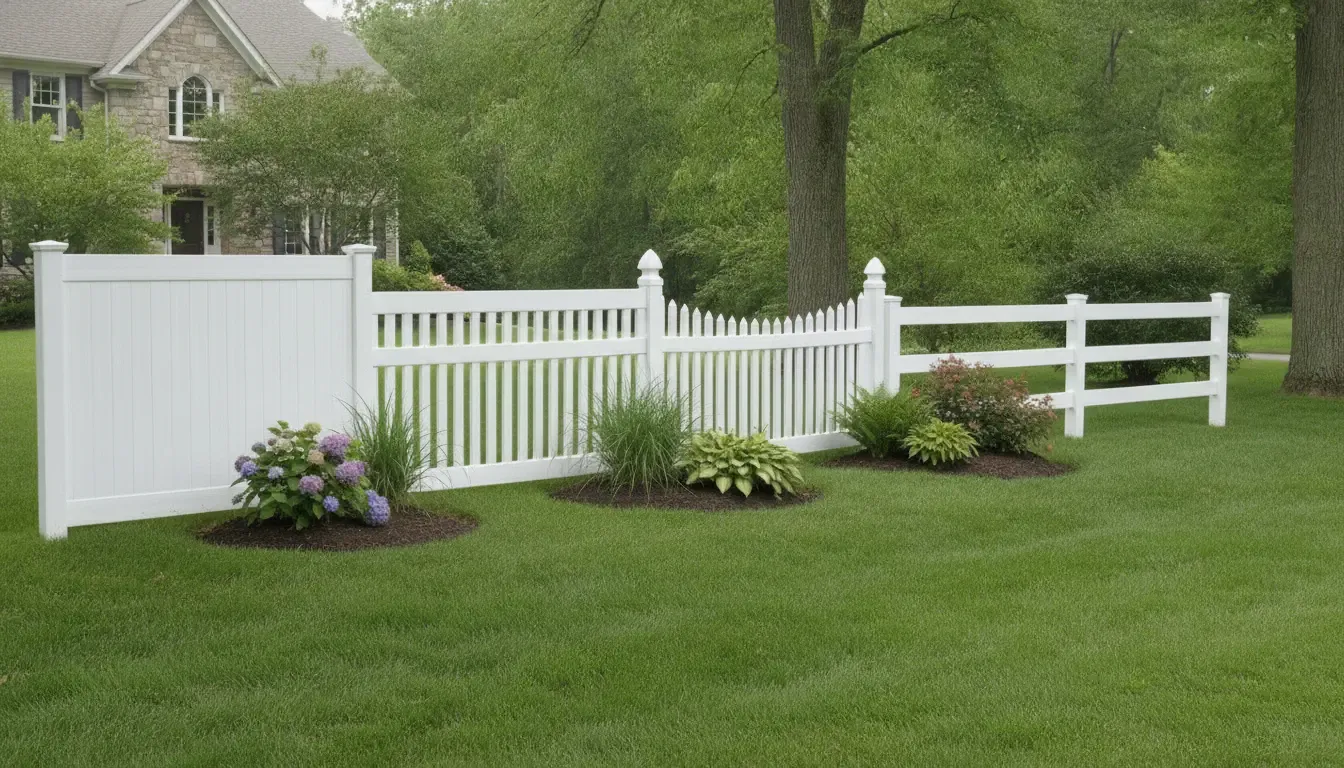
For an overview of residential materials and their uses, see Northstar's guide to residential fencing options. The right choice still depends on association rules and local site conditions. Wood can offer a traditional, adaptable look; vinyl can provide a consistent finished appearance; chain-link may suit a functional boundary; and aluminum can create an open, decorative perimeter. Each option has trade-offs in appearance, privacy, upkeep, and suitability. Confirm the community accepts the material and finish before treating any of them as a viable choice.
A simple comparison can make the review more focused. If the goal is screening, ask whether an open picket or ornamental design provides enough separation, or whether a more solid panel is needed and permitted. If the goal is to define a boundary while keeping a view, compare an open style with a taller privacy design. For pets, consider where gates will be used and how the proposed layout relates to the areas the household needs to contain. These are design questions to discuss with the association and fencing professional, not substitutes for written approval or local review.
Also consider what is around and beneath the proposed fence line. A sloped yard, ledge or rock, sandy ground, trees, a pond, coastal exposure, drainage patterns, and limited equipment access can affect planning. These conditions are not the same on every Massachusetts property. A design that appears straightforward on a level, open lot may need adjustments on a wooded or uneven site. Include relevant site conditions in both the HOA submission and the discussion with the fencing professional.
For example, a plan that runs across a slope may look different from one shown on a flat drawing, and trees or planting beds may affect the location that works for the property. A yard bordering a shared path may call for careful consideration of appearance on both sides, access, and maintenance responsibility. On a coastal or exposed lot, the setting and view may influence what style fits best. Raise these details early so the association can review the proposal as it would appear on the actual site.
For properties with pools, do not treat general HOA approval as confirmation that the enclosure meets applicable safety or local requirements. Ask the town which current rules apply to the pool and property, and make sure the proposal addresses gates and access as well as fence panels. Requirements may differ by location and project details.
How can you prepare a complete HOA fence request?
A clear request makes it easier for a reviewer to understand what you are proposing. First, ask for the association's current application, submission deadline, review schedule, and any required fee or supporting materials. Then confirm whether an approval must be in hand before scheduling work or ordering materials. Do not assume an informal conversation substitutes for the association's stated approval process.
Depending on the association's instructions, useful materials may include a property plan or marked-up site drawing, a description of the proposed fence, material and color details, approximate height, gate locations, photographs of the existing property, and relevant town correspondence. Provide only what is requested, and ask how the association wants it submitted. If a boundary or easement is uncertain, resolve that question rather than presenting an assumed fence line as confirmed.
Before sending the application, check that the written description, drawing, and product information all describe the same proposal. A mismatch, such as a height in the form that differs from the plan, or a gate shown in a different location, can make a request harder to evaluate. Label the sides of the property, identify which direction the fence faces when relevant, and show existing features the reviewer needs to understand. If the association requests photographs, choose views that show the proposed area and its relationship to the home and common spaces.
When describing the project, connect the proposed design to the property's needs. Explain whether the goal is privacy, a safe outdoor area for pets, a defined boundary, or a pool enclosure. Note nearby shared spaces, road or sidewalk visibility, existing landscaping, and any change in grade that a reviewer should understand. A concise, consistent proposal is easier to assess than one that leaves basic details open to interpretation.
Keep a record of the application, attachments, questions, and written decision. If the association asks for a revision, find out exactly what should change and whether the revised version needs another review. If a request is denied or conditions are unclear, refer to the governing documents and ask the association to identify the applicable standard and any review or appeal process. Avoid starting work based on an assumed approval.
How can homeowners coordinate the association and fencing company?
Bring the current HOA requirements to an initial fence discussion. A consultation can help you compare potential materials and layouts against the purpose of the project, the property, and the information the association asks for. Northstar Fence & Rail takes a consultation-led approach and can discuss custom residential fencing, gates, and project planning. The association, however, determines its own review requirements, and the municipality determines applicable local requirements.
Before a design is finalized, identify which details still need confirmation. These might include the exact permitted location, whether the association accepts the proposed material, whether a town review is needed, or whether shared access and landscaping affect the plan. A practical sequence is to gather the HOA documents, confirm town questions, develop a proposal that addresses both, and obtain the required approvals before moving forward. The order can vary, so ask the association and town about their own processes.
It may help to keep a one-page project record with the proposed location, intended use, material and appearance under consideration, open questions, and the person or office responsible for each answer. For instance, the association can clarify its review standard, the municipality can address local requirements, and a fencing professional can discuss material and site considerations. Keeping those roles distinct helps avoid expecting one party's response to settle a question that belongs to another.
Clear communication matters if multiple parties are involved. If a property manager, board, neighbor, contractor, or pool company needs to coordinate, establish who is responsible for each decision and what information they need. For a community property or a project connected to a larger renovation, confirm access, scheduling constraints, and any rules for work near shared areas before plans are settled.
Northstar's company background and approach provide more context on its Massachusetts and New Hampshire service-area work. A free, no-obligation consultation is a chance to discuss the fence's purpose, material options, and site-specific considerations before choosing a direction.
What mistakes can delay a fence project?
- Relying on a neighbor's fence:
Their approval may reflect different documents, lot conditions, or local requirements. Verify your own property and process.
- Assuming a material is allowed:
A general design guideline may limit colors, finishes, or locations even when it does not name every product type. Ask the association how it interprets the current standard.
- Skipping town confirmation:
Private approval and municipal requirements are independent. Ask the appropriate local office what applies to your address.
- Submitting an incomplete plan:
Missing details about location, height, gates, or appearance may lead to follow-up questions or a request for revision.
- Scheduling too early:
Confirm approval and coordination requirements before making commitments that depend on a final layout.
- Ignoring site conditions:
Grade changes, trees, rock, drainage, and access can affect the proposal. Bring them up before the design is treated as final.
These issues are usually easier to address during planning than after materials or installation dates have been arranged. Keep the proposal, the property conditions, and the approval process aligned from the start.
Frequently asked questions about HOA fence rules in Massachusetts
Can an HOA in Massachusetts restrict fence materials or appearance?
Community documents may include exterior design standards, but the rules and how they are applied vary by association. Review the current governing documents and ask the association which standards and approval steps apply to your property. This general guide is not a determination of any particular HOA's authority or rules.
Does HOA approval mean I do not need to check with my town?
No. HOA review and municipal requirements are separate. Ask the appropriate town office whether zoning, permitting, or other local review applies to the proposed fence. Confirm the current requirements for the specific address rather than relying on a general rule or a prior project.
What if my association's fence rules are unclear?
Ask the board or property manager for the current governing documents, applicable design standard, and written explanation of the submission process. If you believe the documents conflict or need a legal interpretation, consult a qualified Massachusetts attorney. A fencing consultation can help with design and site questions, but it is not a substitute for legal advice.
Can a fence be installed before the HOA decision arrives?
Do not assume that you can proceed while a request is pending. Check the association's documents and ask for its written process and decision. Also verify local requirements with the town before making commitments or beginning work.
Call Northstar Fence & Rail at (603) 453-3698 to discuss your fence project.
Plan your fence around the rules and the property
For homeowners navigating HOA fence rules in Massachusetts, the best first move is to confirm the current community standards, ask the town about location-specific requirements, and choose a design that suits the home and site. Bring those details to a consultation so material and layout options can be discussed in context. Northstar Fence & Rail serves homeowners across Massachusetts and Southern New Hampshire with a focus on clear communication, expert craftsmanship, and a plan tailored to the property.
A thoughtful approval process helps you make a well-informed choice before moving ahead with a fence.
Comments