Playground Fencing: A Practical Planning Guide
Well-planned playground fencing does more than mark a property line. The fence should support supervision, guide movement, provide practical access, and fit the equipment, surfacing, and surrounding property without making the space feel closed in.
Call (603) 453-3698 to request a free, no-obligation fencing consultation with Northstar Fence & Rail.
In brief: Effective playground fencing balances controlled access, clear visibility, durable materials, and site-specific planning. It should work with the play area's layout and protective surfacing, while leaving local review and applicable requirements to the property owner, designer, and appropriate authority.
The U.S. Consumer Product Safety Commission reports that more than 200,000 children visit emergency rooms each year with injuries associated with playground equipment and notes that many injuries involve falls onto the ground. That makes whole-site coordination important; a fence is one part of a larger safety and property-planning decision. Before comparing materials or gate details, start by defining what the perimeter needs to accomplish for the people who use and manage the space.
What Should Playground Fencing Accomplish?
A well-planned playground perimeter should do more than mark a property line. It should help define where play happens, guide people toward appropriate entry points, and create a clear relationship between the play area, surrounding circulation, and the rest of the property. For a homeowner, school, childcare provider, or property manager, that clarity supports supervision and everyday organization without making the space feel closed off.
Controlled access. The perimeter should make it apparent where children, caregivers, staff, and visitors enter and leave. That does not mean fencing alone can prevent every incident. Rather, a considered boundary helps property owners establish responsibility for the play area and identify which access points need regular attention. Gate placement, nearby walkways, service access, and the relationship to parking or drive lanes all deserve review as part of the overall plan.
Visibility and supervision. A fence should support useful sightlines instead of creating unnecessary visual barriers. Caregivers and staff need to understand how the perimeter interacts with the equipment, seating, landscaping, and approaches to the play area. The right balance depends on the property. A residential yard may prioritize an open view into the play space, while a shared commercial or community setting may also need a more defined boundary between play and other activities.
Coordination with surfacing and equipment. The fence line should be considered alongside the layout of the equipment and the protective surfacing, not added as an afterthought. The U.S. Consumer Product Safety Commission playground checklist notes that most playground-equipment injuries occur when a child falls onto the ground. It recommends appropriate surfacing around equipment, including at least six feet of coverage in all directions and, for certain loose-fill materials, at least 12 inches of depth. Those recommendations are part of whole-site planning, not a claim that a fence prevents injuries.
The perimeter should also leave property owners with a practical maintenance boundary. Equipment, surfacing, gates, vegetation, drainage, and fence conditions may need periodic review. Treating the fence as one component of a coordinated site plan creates a more dependable result than choosing a boundary by appearance alone.
Which Type of Fence Is Best for a Playground?
There is no universal best material for every playground. The right choice depends on how the area is used, how much visibility supervisors need, the desired appearance, maintenance expectations, gate locations, and the conditions around the play space. Northstar Fence & Rail documents wood, vinyl, chain-link, and aluminum fencing for residential and commercial projects in Massachusetts and New Hampshire. Each can serve a playground setting when it is selected and planned around the property rather than treated as a stand-alone product.
Material | Visibility | Durability and maintenance | Appearance and site fit |
Wood | Can provide privacy or partial screening, depending on the layout. | Requires ongoing attention to its finish and condition, especially in an exposed, high-use area. | Warm and adaptable for residential yards, natural landscapes, and properties where a more traditional look matters. |
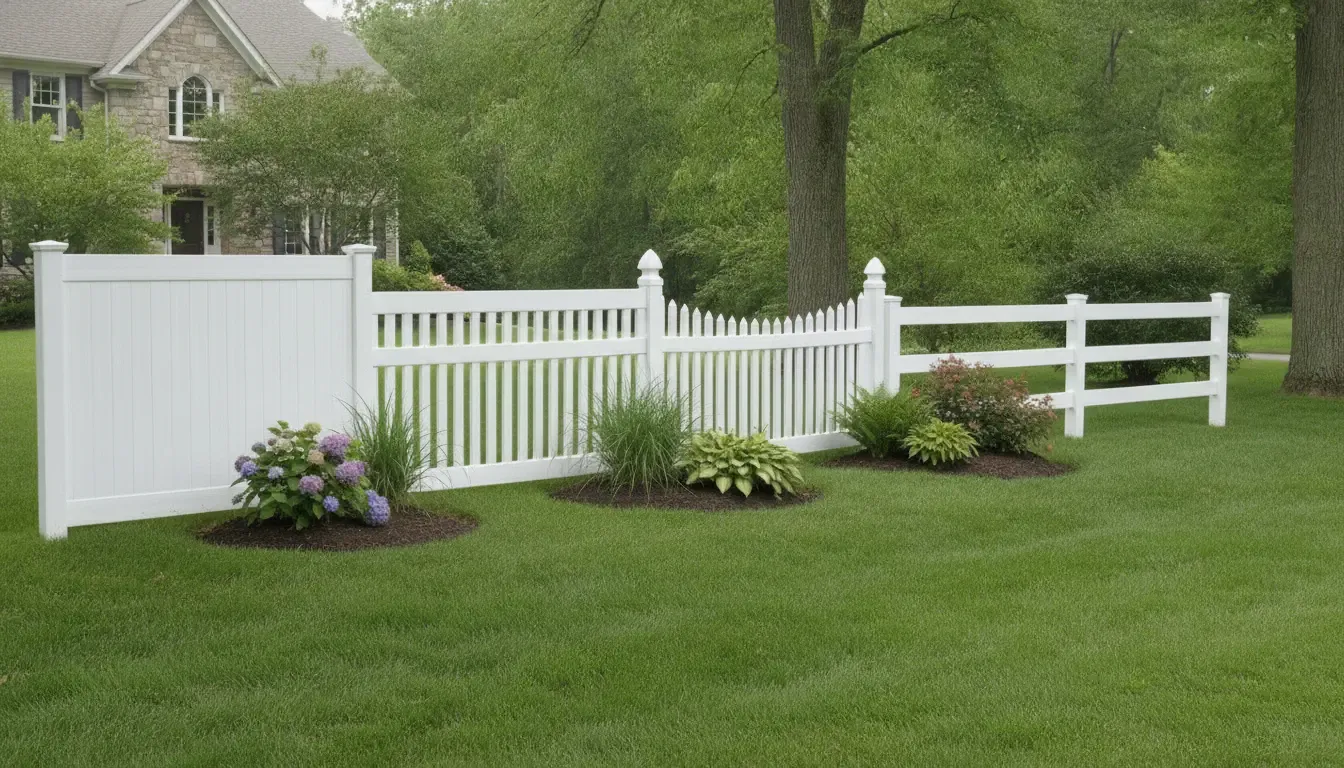
Vinyl | Solid styles limit views, while selected layouts can keep the perimeter visually open. | Offers a smooth, consistent surface and does not require the same type of finishing routine as wood. | Clean and polished, with a useful fit for family properties seeking a defined perimeter and coordinated appearance. |
Chain-link | Provides strong visibility for supervision and helps the play area feel connected to its surroundings. | Practical for active settings, with maintenance focused on the fence fabric, framework, gates, and connections. | Functional and visually light, often well suited to schools, community spaces, and service areas where openness is important. |
Aluminum | Open designs support sightlines while still defining the playground boundary. | Resists the routine concerns associated with some other materials and presents a finished, orderly perimeter. | Refined and versatile for residential, commercial, and landscaped settings where appearance is part of the decision. |
For a playground, visibility and controlled access often deserve equal attention. A solid fence may help separate play from a driveway, street, or neighboring activity, but it can also reduce sightlines. An open design may support supervision, yet it may not provide the screening or boundary definition a particular property requires. The fence should also work with the gate plan, circulation around the equipment, and the available space for maintenance.
Material selection should be evaluated alongside the property's users and setting, not copied from a general residential checklist. Northstar's guide to fence options for family properties offers a broader comparison of material characteristics. A playground project needs that same balanced evaluation with added attention to supervision, access, durability, and coordination with the play area.
How Should Playground Fencing Support Visibility and Access?
Effective playground fencing should define the play area without making supervision harder. A clear sightline lets caregivers, staff, and property managers observe activity from nearby paths, gathering areas, and building entrances. Avoiding unnecessary visual barriers can also make arrivals and departures feel more orderly, especially where children move between the play space, parking area, and other outdoor amenities.
Access deserves the same level of planning. Gates should be located where adults naturally approach the playground, with enough room for everyday circulation and any expected maintenance or service activity. The gate, latch, and surrounding transition should feel intuitive for responsible adults while discouraging uncontrolled movement into or out of the play area. Northstar can discuss how the fence layout, gate placement, property use, and existing site conditions should work together rather than treating the perimeter as an isolated feature.
Child-friendly transitions matter at the ground level, too. A fence line should not create an unexpected pinch point, awkward route, or trip hazard near an entry. The surrounding area should be reviewed for changes in grade, exposed footings, rocks, stumps, and other conditions that could affect circulation. The U.S. Consumer Product Safety Commission playground checklist identifies these conditions as topics for regular safety review.
Hardware and openings deserve careful review
During an inspection conversation, look closely at more than the fence material. The CPSC checklist calls out dangerous hardware such as open S-hooks and protruding bolt ends, along with sharp points or edges. It also addresses openings that could trap children. Its guidance describes openings as needing to measure less than 3.5 inches or more than 9 inches. These points are useful review topics for the owner, designer, and qualified professionals involved in the project, not a substitute for a site-specific compliance determination.
Guardrails and nearby elevated surfaces should be considered as part of the complete play-area plan. The CPSC recommends guardrails on elevated surfaces such as platforms and ramps, and recommends checking equipment and surfacing regularly. A thoughtful playground fencing review therefore considers visibility, gates, circulation, adjacent hazards, and an ongoing condition-check process together.
What Site Conditions Matter in Massachusetts and Southern New Hampshire?
A playground fence has to fit the property around it, not just the intended play area. In Massachusetts and Southern New Hampshire, a site assessment may need to account for exposed rock or ledge, slopes, wooded edges, drainage patterns, seasonal snow, and the equipment already on the ground. These conditions are not present on every property, but any of them can affect the fence layout, access, durability, and coordination required for a successful project.
Rocky soil, ledge, or a steep grade may influence where a fence can be placed and how its lines relate to the play area. A wooded property can introduce roots, narrow work areas, uneven ground, and limited equipment access. Rather than assuming a standard perimeter will work, the owner and fencing professional should review the actual terrain and identify a layout that supports visibility and controlled access while respecting the property.
Drainage deserves equal attention. Water moving toward the play area can affect the surrounding ground, surfacing, gates, and long-term fence performance. Snow storage and winter access may also matter, particularly where plowed snow could be pushed against a fence or block a gate. Existing walkways, pavement, curbs, retaining features, playground surfacing, and equipment clearances should be considered together so the fence does not create an awkward transition or interfere with normal use.
Access planning is especially important for schools, childcare properties, parks, multifamily communities, and shared residential settings. The project may need to coordinate with maintenance vehicles, emergency access expectations, landscapers, property managers, neighbors, or an adjoining property owner. A clear conversation about who uses each entrance, how gates are supervised, and who is responsible for ongoing upkeep can prevent avoidable conflicts.
For a broader look at planning a fence for your property, consider how the intended use, appearance, materials, and existing conditions work together. Northstar Fence & Rail can help property owners and managers assess these site factors through a consultation-led planning process, without treating one material or layout as universally appropriate.
How Do You Coordinate Playground Fencing With Local Requirements?
A playground fence is easier to plan when the people responsible for safety, design, operations, and property approvals are involved before the fence details are finalized. In Massachusetts and Southern New Hampshire, the applicable review process can vary by municipality and by the type of property. The owner should confirm current requirements with the relevant local authority and qualified project professionals. Northstar Fence & Rail can help coordinate the fencing scope, but this information is not legal advice and does not establish that a project complies with every applicable rule.
The CPSC Public Playground Safety Handbook is a useful reference for owners and designers reviewing the broader play environment. ASTM also publishes pages that may be relevant to the project and its setting. One addresses fences and barriers around public, commercial, and multifamily recreational areas through ASTM F2049. Others address perimeter enclosures in sport and recreation settings through ASTM F3729 and certain water-spray and play-area enclosures through ASTM F2699. The owner, playground designer or operator, municipality, and other qualified professionals should determine which references apply.
- Who is responsible for each decision?
Identify the property owner, playground designer or operator, fence contractor, maintenance contact, and municipal authority involved in review. Clarify who will confirm the final fence layout, gate operation, access control, and relationship to the play equipment.
- Which local approvals or reviews are required?
Ask the municipality whether zoning, building, site, recreation, property-use, or other approvals apply. Requirements may differ between a private property, childcare site, school, multifamily development, and public recreation area.
- Which safety references should guide the design review?
Ask the designer or qualified reviewer to evaluate the CPSC handbook and applicable ASTM material alongside the equipment layout, surfacing, circulation, gates, and surrounding property. A fence should be considered as part of the complete environment, not as a standalone compliance solution.
- How will the approved plan be documented?
Confirm the agreed fence line, openings, access points, site constraints, responsible reviewers, and any conditions attached to approval. Keeping these decisions together helps the owner, operator, municipality, and fencing team work from the same scope.
What Should Property Owners Bring to a Playground Fence Consultation?
A productive consultation starts with a clear picture of how the space is used. Bring a simple site plan, recent photographs, or an aerial view showing the playground, property lines, nearby paths, parking, buildings, and any planned changes. Note who uses the area, when it is busiest, and whether the fence needs to separate children from roads, pets, service areas, water, or other parts of the property.
It also helps to identify practical decisions before discussing materials:
Which access points are needed for children, supervisors, maintenance crews, emergency response, and deliveries?
Where should adults be able to see into and across the play area?
What equipment, protective surfacing, gates, landscaping, or hardscape already exists?
Are there slopes, ledge, rock, drainage concerns, wooded edges, snow storage areas, or limited equipment access?
Who will handle routine checks, gate care, vegetation control, and future repair coordination?
These details help Northstar evaluate the setting rather than recommend a material in isolation. Wood fencing, vinyl fencing, chain-link fencing, and aluminum fencing can each serve different property goals, but the appropriate choice depends on visibility, access, durability, appearance, site conditions, and how the property will be maintained. Northstar provides custom residential and commercial fencing, installation, repair, and consultation. Its founders bring more than 50 years of combined fencing and family-business experience, while the consultation remains focused on the specific property and its users.
For broader property-planning context, review this guide to planning a fence for your property. Before the meeting, ask the owner, designer, property manager, or local authority which reviews may apply. Requirements can vary among municipalities in Massachusetts and Southern New Hampshire, so bring any local feedback, site approvals, or questions that need to be coordinated. A free, no-obligation consultation with Northstar can then help clarify the fencing options and next decisions without treating the conversation as a substitute for local or professional review.
Ready to discuss the site? Contact Northstar Fence & Rail at (603) 453-3698 to request a free, no-obligation consultation.
Frequently Asked Questions
What type of fence is best for a playground?
The best choice depends on the property, the level of visibility needed, access points, terrain, and how the space will be used. Aluminum and chain-link fencing can support an open sightline, while vinyl or wood may provide a different appearance or added visual separation. The gate, hardware, spacing, and relationship to nearby play equipment matter as much as the material. A site consultation can help match the fence to the property and the people supervising it.
How tall should a playground fence be?
There is no single height that fits every playground. The right decision depends on the age of the children, the surrounding property, access-control goals, visibility, nearby grades, and applicable municipal requirements. A fence should be planned as part of the full perimeter rather than selected from a generic height recommendation. Confirm current requirements with the municipality or other authority overseeing the property before finalizing the design.
Should playgrounds be fenced?
Fencing can help define the play area, guide movement, support supervision, and reduce unintended access to nearby driveways, roads, water, or other property features. It is not a substitute for appropriate supervision, safe equipment, protective surfacing, or a thoughtful site plan. Whether fencing is appropriate depends on the property and its risks, so homeowners, schools, childcare providers, and property managers should evaluate the full setting before choosing a perimeter.
What should I plan before installing playground fencing?
Consider the fence location, gates, emergency and service access, sightlines, drainage, slopes, ledge or rock, equipment clearances, and how maintenance vehicles or caregivers will move through the property. In Massachusetts and Southern New Hampshire, review the proposal with the applicable local authority because requirements and approvals can vary by municipality. A fencing contractor can coordinate these practical details without turning the project into a one-size-fits-all installation.
Ready to Plan Your Playground Fence?
A thoughtful consultation can help connect your playground's safety goals, visibility, access points, and site conditions into a practical fencing plan. To discuss your project with Northstar Fence & Rail, call (603) 453-3698 to request a free, no-obligation consultation.
Comments