Vinyl Privacy Fence Installation: What Homeowners Should Know
A vinyl privacy fence can give a property a quieter, more defined outdoor space without the recurring painting, staining, or sealing associated with many wood fences. The best result, however, depends on more than the panel style. Property lines, grade changes, soil, gates, drainage, local requirements, and the way you use the space all influence the right design.
For homeowners in Massachusetts and Southern New Hampshire, professional planning is especially valuable when a property includes ledge, wooded terrain, slopes, older landscaping, or a pool. This guide explains the decisions worth making before a vinyl privacy fence installation and how Northstar Fence & Rail helps homeowners choose a solution that fits the property.
Planning a privacy fence? Request a free, no-obligation consultation with Northstar Fence & Rail at Northstar Fence & Rail or call (603) 453-3698 to discuss your goals and site.
What are the benefits of a vinyl privacy fence?
Solid vinyl panels can reduce views into a yard, patio, pool area, or service space while creating a clean boundary around the property. That combination of privacy and visual consistency makes vinyl a popular consideration for homeowners, property managers, businesses, and contractors.
- Privacy:
Solid panels create separation from neighboring properties and nearby roads.
- Low maintenance:
Routine cleaning is generally simpler than the recurring refinishing associated with wood.
- Design flexibility:
Available profiles, colors, heights, post caps, and gate options can complement the home or commercial property.
- Property function:
A well-planned fence can help define play areas, pet areas, outdoor living spaces, equipment zones, and pool surroundings.
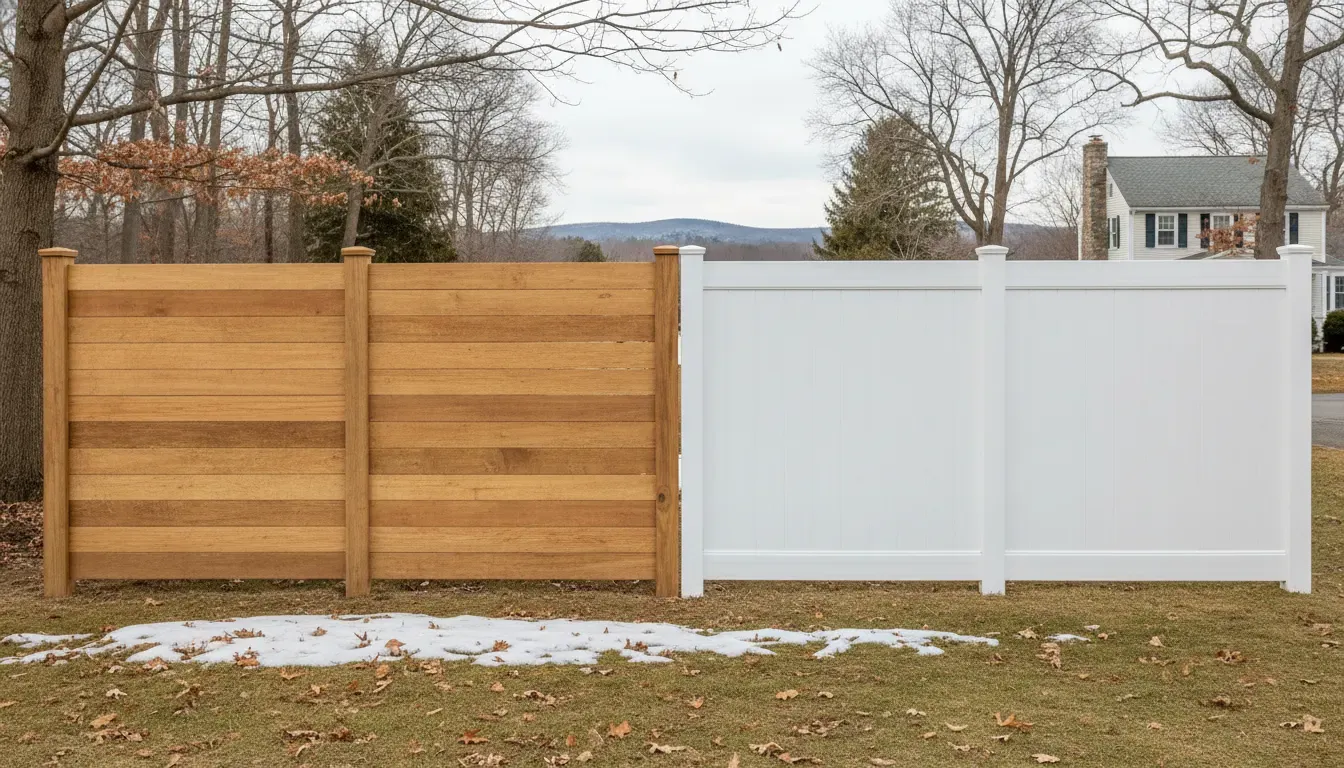
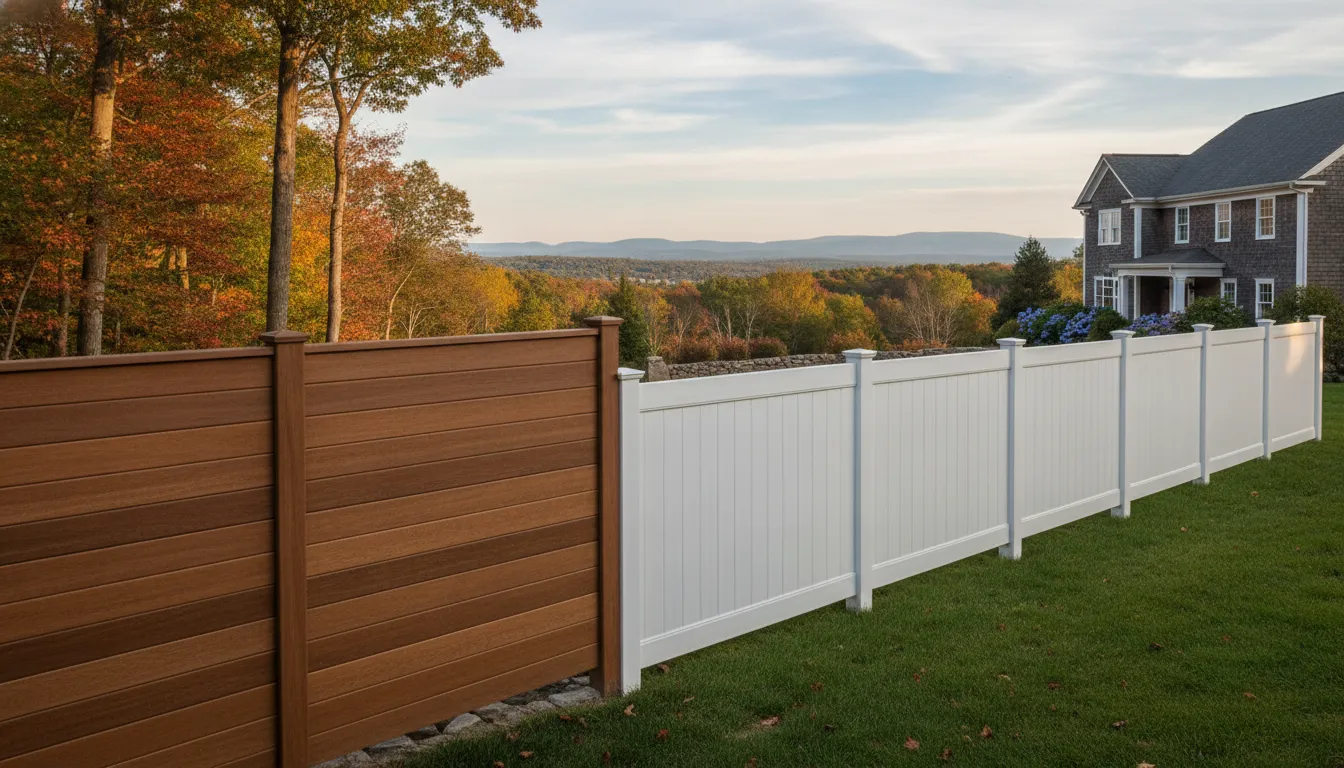
Vinyl is not the universal answer for every property. Wood may be a better fit when natural texture or extensive on-site customization is the priority. Aluminum can be appropriate when an open view or lighter visual appearance matters. Chain-link fencing may be more practical when visibility and utility are more important than screening. Comparing materials by purpose, appearance, maintenance, and site conditions leads to a better decision than choosing a material from a photograph alone.
Which vinyl privacy fence style fits the property?
Privacy fencing is available in more than one visual treatment. A traditional solid profile can create a strong visual barrier. Decorative accents, lattice details, contrasting post caps, and coordinated gates can soften the appearance or connect the fence to the home’s trim and landscaping. Some homeowners prefer a classic white finish, while others choose a different color or texture for a more understated look.
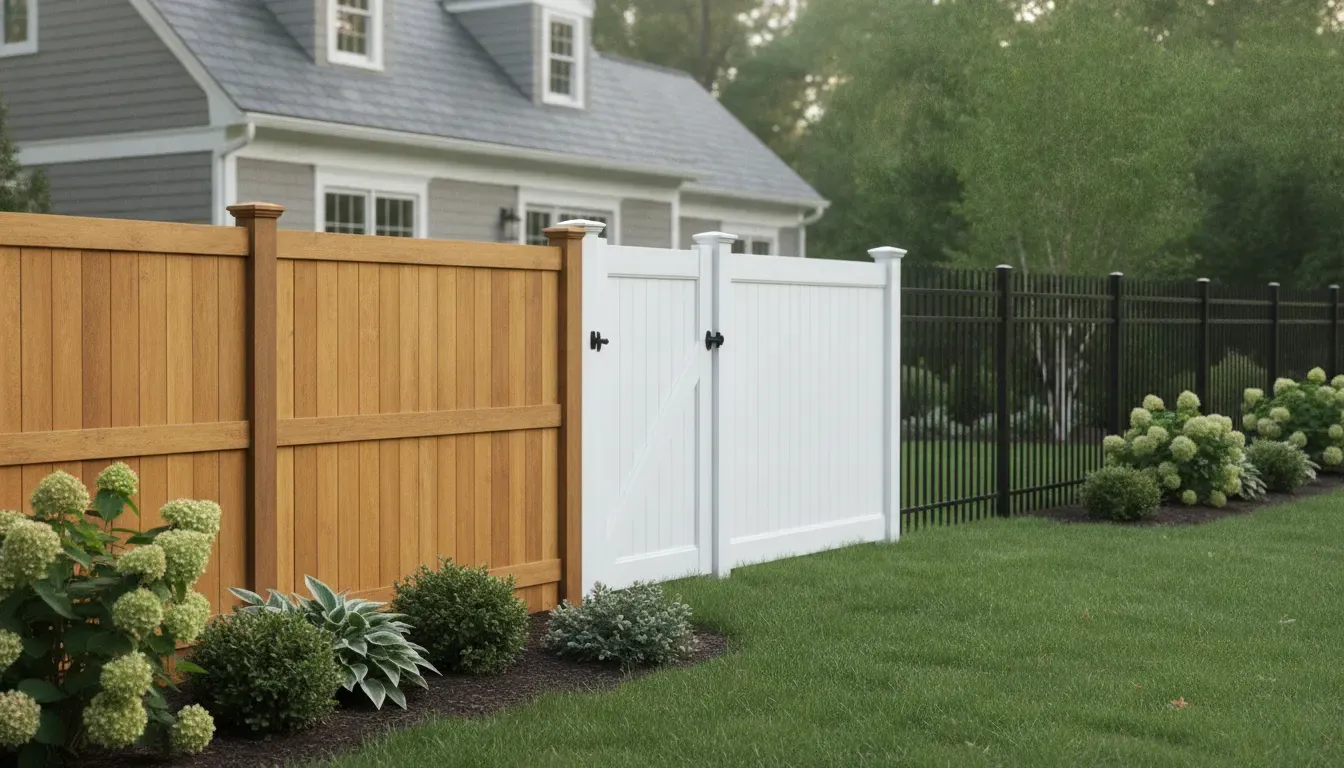
Think about the view from both sides of the fence. A design that looks right from the yard should also present a finished appearance toward a neighbor, sidewalk, driveway, or street. Gate placement deserves the same attention. The opening should work with daily foot traffic, vehicles, garden equipment, pets, and snow management rather than being treated as an afterthought.
Height is another property-specific choice. More height can improve screening, but local rules, sight lines, wind exposure, and the relationship to nearby homes may affect what is appropriate. Northstar can help compare panel profiles and gate arrangements during a consultation so the finished fence supports both privacy and curb appeal.
What site conditions affect vinyl fence installation?
The fence line may look simple from a distance, yet New England properties can present very different installation conditions. Rocky soil or ledge may affect equipment and post locations. Hills and grade changes may require a design that follows the terrain while maintaining a consistent appearance. Wooded lots can involve roots, limited access, and careful coordination around established trees. Poor drainage or wet areas may require additional planning for long-term performance.
Access matters as well. A narrow side yard, retaining wall, pool, detached garage, or adjacent property can change how materials and equipment reach the work area. A professional site review identifies these constraints early, before the selected style or gate layout becomes difficult to change.
Weather and seasonal ground movement are also part of the planning conversation in Massachusetts and New Hampshire. Posts, corners, and gate openings need a support and layout approach suited to the fence system and the property. Northstar evaluates the project as a complete system rather than treating each panel as an isolated product.
What should homeowners confirm before the project?
Before work begins, confirm the boundary and the rules that apply to the specific address. An older fence, hedge, driveway, or retaining wall may not indicate the legal property line. A property survey or qualified surveyor can help resolve uncertainty before the layout is finalized.
Permitting, setbacks, height limits, visibility requirements, and homeowners association rules can vary by municipality. Massachusetts and Southern New Hampshire do not have one universal rule for every fence project. Check with the applicable building or zoning office, and ask the fence professional to identify questions that should be answered before scheduling the installation. Fences near pools, roads, sidewalks, and property corners deserve particular care.
Underground utilities should also be addressed before excavation. In Massachusetts, Dig Safe is the appropriate starting point for utility marking. New Hampshire projects can use the state’s 811 utility notification information. Private lines, such as irrigation, landscape lighting, septic components, or wiring to an outbuilding, may require separate identification. Share known private-line locations with the installer.
How should gates and privacy goals be planned?
A fence can meet its privacy goal and still be frustrating if the gates do not work with the property. Consider how people, pets, lawn equipment, bins, and vehicles move through the space. A pedestrian gate may be useful near a walkway, while a wider opening can improve access to a backyard or service area. The swing direction should account for steps, slopes, landscaping, snow, and neighboring improvements.
Gate posts and hardware carry more movement than a standard line section. The selected gate needs compatible support, hinges, latches, and reinforcement for its size and use. Heavy or frequently used gates may need a more deliberate structural plan than a simple fence panel.
For a pool enclosure, the fence is part of a safety system, not merely a privacy feature. Review current guidance from the U.S. Consumer Product Safety Commission and confirm the requirements that apply to the property with the local authority. Self-closing and self-latching features, gate position, access control, and surrounding structures should be discussed before the design is approved.
Want help comparing fence materials or gate layouts? Northstar Fence & Rail offers free, no-obligation consultations for residential and commercial projects throughout Massachusetts and Southern New Hampshire. Call (603) 453-3698 to start a conversation.
How does professional planning protect the finished result?
Professional planning connects the visible design to the conditions below and around it. The layout should account for boundaries, transitions, corners, gates, drainage, grade, access, and the fence system’s specifications. That preparation helps reduce avoidable changes and gives the homeowner a clearer understanding of what the finished project is intended to accomplish.
It also creates an opportunity to discuss maintenance realistically. Vinyl generally does not need the same refinishing routine as wood, but it still benefits from periodic cleaning and inspection. Dirt, organic growth, impact, storm damage, and gate movement should be addressed before they become larger appearance or function issues. A damaged panel or post may call for a targeted repair or section replacement rather than an assumption that the entire fence must be removed.
Northstar Fence & Rail brings more than 50 years of combined family-business and fencing experience to projects for homeowners, businesses, contractors, pool companies, landscapers, and property managers. The focus is straightforward: clear communication, expert craftsmanship, and a fence selected for the way the property will actually be used.
Vinyl privacy fence installation questions
Is vinyl privacy fencing a good choice for a New England property?
It can be, especially when a homeowner wants solid screening and a lower-maintenance finish. The best choice depends on the property’s grade, soil, wind exposure, access, drainage, desired appearance, and local requirements. A site consultation is the right way to evaluate those factors together.
Does a vinyl privacy fence require maintenance?
Vinyl typically requires less recurring finish work than wood. Cleaning with appropriate materials and checking panels, posts, gates, and hardware periodically can help preserve its appearance and function. Maintenance needs still vary with exposure, landscaping, weather, and how the fence is used.
How long does a vinyl fence installation take?
Project timing depends on the fence layout, property access, site conditions, material availability, permitting, weather, and the amount of preparation required. Northstar can discuss the likely sequence for a specific property during a consultation rather than promise a universal timeline.
Can vinyl fencing be installed on a slope?
Many sloped properties can be fenced, but the design may need to follow the grade or use carefully planned transitions. Steep slopes, ledge, walls, drainage, and existing landscaping can affect the appropriate approach. A site review helps determine which layout will look consistent and perform well.
Discuss your privacy fence project with Northstar
The right vinyl privacy fence balances privacy, safety, appearance, access, and long-term serviceability. Northstar Fence & Rail can help you compare options, identify site considerations, and plan a professional installation around your property’s needs.
Request a free, no-obligation consultation by calling (603) 453-3698 or visiting Northstar Fence & Rail. The team serves homeowners, businesses, contractors, and property managers throughout Massachusetts and Southern New Hampshire.
Comments