How to Choose a Security Fence Contractor in MA or NH
A security fence has to do more than mark a property line. It should support how the site is used, provide the right level of protection, complement the property, and remain practical to access and maintain. Those decisions can look different for a Massachusetts homeowner, a Southern New Hampshire business, or a property manager coordinating a larger project.
The right security fence contractor will evaluate your property, security goal, fence material, gates, access needs, and applicable local requirements before recommending a solution. A thoughtful consultation connects those details to a practical plan instead of pushing a one-size-fits-all fence.
What Should You Look for in a Security Fence Contractor?
A strong contractor conversation should begin with your property and security goals, not with a standard package. The contractor should ask how the space is used, what you want the fence to accomplish, where people or vehicles need access, and how the finished work should relate to the property. For a home, that may involve privacy, pets, children, or a defined boundary. For a business or managed property, the discussion may also include traffic flow, multiple entrances, tenant coordination, deliveries, and durable perimeter control.
Look for a thoughtful consultation
A useful consultation includes a property assessment, guidance on fence selection, and practical project planning. The contractor should explain relevant options in clear language and acknowledge tradeoffs instead of presenting one material as the answer for every site. Ask how the proposed fence, gates, layout, and access points support your priorities. A security fence contractor should also identify questions that may require local review, including requirements that vary among Massachusetts and New Hampshire municipalities.
Northstar Fence & Rail provides free, no-obligation consultations that include property assessment, fence-selection guidance, and project planning. That consultative approach helps property owners compare options based on the property, intended use, security needs, and overall appearance. Northstar's guide to planning a fence for your property is another useful starting point when you are defining the look and function of the boundary.
Choose experience that matches the project
Relevant experience matters more than a generic claim to install fences. Ask whether the contractor works with projects similar to yours, including residential boundaries, commercial properties, pool enclosures, gates, or larger sites requiring coordination. A contractor familiar with both residential and commercial work can recognize how priorities change between a homeowner's yard and a business property. Consider employees, tenants, customers, deliveries, and public-facing access.
Northstar handles custom residential and commercial fencing tailored to property style and security requirements. Its service range includes wood, vinyl, chain-link, and aluminum fencing, along with gates and custom solutions. The founders bring more than 50 years of combined fencing and family-business experience. That background supports informed material selection and careful planning when a project calls for more than a simple boundary installation.
Pay attention to communication and coordination
Before hiring, notice whether the contractor listens carefully, explains the next steps, and documents the scope in a way you can understand. Good coordination should account for site access, gate locations, scheduling considerations, and communication with the people affected by the work. For commercial or managed properties, ask who will serve as the point of contact and how changes or site questions will be handled. Clear communication and quality workmanship are practical signs of a contractor relationship built for the full project, not only the initial sale.
How Does a Security Fence Contractor Assess a Massachusetts or New Hampshire Property?
A thoughtful site assessment looks beyond the proposed fence line. A security fence contractor should first understand how the property is used and what the fence needs to accomplish. The contractor should then identify conditions that could affect design, installation, access, and long-term service.
Terrain, soil, and drainage
Massachusetts and New Hampshire properties can include slopes, wooded areas, ledge, exposed rock, sandy ground, dense soil, or limited working space. These conditions may affect layout, equipment access, post placement, and the practical choice of fencing. Soil and drainage also deserve attention where water collects, the ground changes elevation, or seasonal conditions could affect how a gate approaches and operates.
Rock and ledge may influence the planned fence route. A steep or wooded section may require more careful coordination than an open, level yard. If a project involves a pool enclosure, the assessment should also consider barrier layout, gate location, ground conditions, and applicable local requirements. Northstar's guide to Massachusetts pool-fence requirements offers additional context, while requirements should still be confirmed with the relevant municipality or authority.
Exposure, access, and gates
Wind exposure, open fields, coastal conditions, and elevated locations can all shape the planning conversation. Fence height, profile, posts, gates, hardware, and layout may need to be considered together rather than selected independently. For a closer look at these factors, see Northstar's guidance on fence planning for exposed properties.
Access matters for both residential and commercial work. The contractor should consider where materials and equipment can reach the site, as well as how people or vehicles will pass through the completed fence. A gate may serve a driveway, walkway, service area, pool, or business entrance. A security goal is only useful if the finished layout works with the property's daily movement.
Local requirements and property boundaries
Permit, setback, height, boundary, and pool-barrier requirements can vary by municipality and by project type. Massachusetts and New Hampshire should not be treated as having one universal rule. A responsible contractor can identify questions that need verification, but the property owner should confirm current requirements with the applicable town, city, building department, or other authority. That local review is part of sound planning, not an afterthought.
Northstar's consultation process helps connect the site's physical conditions with the property's security, appearance, access, and service needs. It also gives the property owner a chance to identify local questions before the scope is finalized.
Which Fence Materials Work for Security and Appearance?
There is no single best material for every security project. The right choice depends on what the fence needs to accomplish and how the property is used. Visibility, privacy, appearance, gates, and access points all matter. A homeowner may prioritize privacy and curb appeal, while a commercial property manager may need clear boundary definition, dependable access, and straightforward coordination with other site work.
Each material below can serve a legitimate purpose when it is planned for the property rather than selected in isolation. A qualified security fence contractor should consider the site, desired privacy, pedestrian or vehicle access, local requirements, nearby buildings, and landscaping.
Fence material considerations for security projects
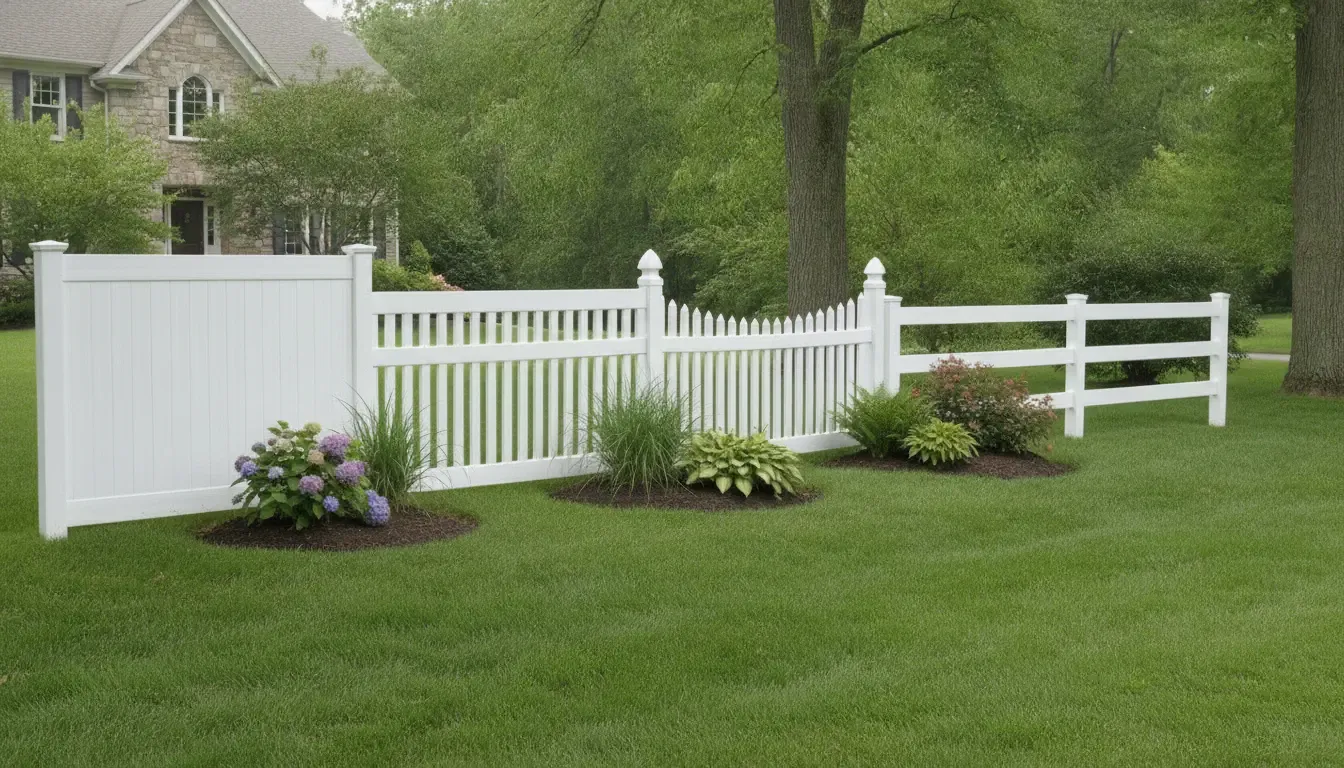
Material | Common uses | Strengths | Tradeoffs |
Chain-link | Boundary definition, commercial properties, utility areas, and locations where visibility matters. | Practical for clear perimeter coverage and security-focused layouts. | Provides less visual privacy and may feel more utilitarian in some residential settings. |
Aluminum | Residential boundaries, formal entrances, decorative perimeters, and properties where appearance matters. | Offers a refined appearance, open sightlines, and a durable material option. | Open designs do not provide the same privacy as solid panels, and the style must suit the architecture. |
Wood | Privacy fencing, residential properties, gardens, and settings where a warmer natural appearance is preferred. | Flexible in appearance and well suited to privacy-focused layouts and varied property styles. | Solid construction changes the visual character of the property and calls for planning around exposure, drainage, and maintenance. |
Vinyl | Residential privacy, property separation, and coordinated designs where a clean finished look is desired. | Provides a consistent appearance and can support privacy-oriented layouts. | Design, site conditions, and surrounding architecture still determine whether it is the right fit. |
Security and appearance do not always require opposing choices. One property owner may prefer an open fence that defines the boundary without hiding the landscape, while another may need a more private enclosure. Even a traditional post-and-rail layout can be adapted for a more secure boundary with discreet wire mesh, as discussed in these secure boundary fence options.
The most useful material comparison happens alongside a site assessment. Soil, slopes, rock, drainage, exposure, existing landscaping, and the location of vehicle or pedestrian gates can all affect the plan. Northstar's consultation process helps homeowners, businesses, contractors, and property managers match the material to the property's actual security and appearance goals.
Why Do Gates and Access Planning Matter?
A fence can define a property boundary, but the gate determines how people, vehicles, equipment, and deliveries move through it. A well-planned access point should support the property's security goals without making everyday use unnecessarily difficult. That means considering who will use the gate, how often it will open, what must pass through it, and how the opening relates to driveways, walkways, buildings, parking areas, and neighboring features.
Pedestrian gates and vehicle gates have different planning needs. A pedestrian entrance may need a comfortable approach and hardware that is simple for regular users. A driveway gate must account for vehicle paths, turning space, clearance, and post locations so it can operate without interfering with traffic. On a commercial property, the plan may also need to coordinate employee access, deliveries, service vehicles, tenant movement, emergency considerations, and the sequence of work with other contractors.
Operation depends on more than the gate itself
Alignment, post placement, hinges, latches, and other hardware all contribute to how a gate functions over time. A gate that looks appropriate on a drawing may still be a poor fit if the opening, grade, drainage, or approach has not been considered carefully. In Massachusetts and New Hampshire, properties may include rock, ledge, slopes, wooded access, changing soil conditions, or drainage challenges. These site factors can affect how the gate area is planned and how reliably it operates.
Northstar Fence & Rail installs, customizes, and repairs gates as part of custom residential and commercial fencing projects. The team can help property owners evaluate whether the proposed access arrangement suits the property's use, appearance, and security priorities. Gate planning should be part of the initial conversation with a local fence installation and consultation company, not an afterthought once the fence layout is complete.
What Questions Should You Ask a Security Fence Contractor?
A thoughtful conversation with a prospective security fence contractor should help you understand what will be built, why it suits the property, and how the project will be managed. Use questions like these to compare proposals on more than a single bottom-line figure.
- What security or property goal will this design address?
Explain whether your priority is a defined boundary, controlled access, privacy, protection for people or animals, or a combination of needs. Ask the contractor to connect the proposed height, layout, material, and visibility to that goal.
- How will you assess the property before recommending a solution?
Ask whether the consultation will consider slopes, soil, drainage, rock or ledge, wooded areas, exposure, existing structures, and equipment access. A useful assessment should also identify conditions that could affect fence layout, installation, or gate operation.
- Which materials are appropriate for this site and appearance?
Ask the contractor to explain practical differences among chain-link, aluminum, wood, vinyl, and any custom options under consideration. The right choice may depend on security needs, maintenance expectations, privacy, property style, and surrounding landscaping.
- How will gates and daily access be planned?
Discuss pedestrian gates, vehicle gates, delivery routes, driveways, equipment, and frequency of use. For a commercial property, ask how access points will be coordinated with tenants, employees, customers, or other contractors.
What local requirements should we verify?
Requirements can vary among Massachusetts and New Hampshire municipalities and by property type. Ask what local questions you should confirm with the applicable town or authority, including permits, placement, and pool-related requirements. In Massachusetts, review the
Massachusetts homeowner guidance on Home Improvement Contractor registration
and confirm how it applies to your project. Registration and construction-supervisor licensing are distinct matters.
- What will communication and coordination look like?
Ask who will be your point of contact, how changes will be documented, what access the crew will need, and how site conditions or scheduling issues will be communicated. Clear expectations matter especially when a property manager, builder, or commercial tenant is involved.
- How is the project-specific price developed?
Ask what the proposal includes, which materials and gates are covered, how site conditions are reflected, and how changes would be handled. Reputable planning should be based on your property and scope, not a universal price. Request the details in writing so you can compare proposals fairly.
When Is a Local Contractor the Better Choice?
A local contractor is often the better fit when a security fence needs to work with the property rather than simply surround it. Massachusetts and Southern New Hampshire properties can present different planning considerations, including slopes, rock or ledge, soil and drainage conditions, wooded access, exposure, and limited room for equipment or material delivery. A contractor who evaluates those conditions in person can help connect the security goal with an appropriate fence, gate arrangement, and installation plan.
Local familiarity also makes communication more practical. Homeowners may need to coordinate fencing with landscaping, pools, pets, children, or neighboring properties. A business owner or property manager may need to plan around tenants, deliveries, parking, vehicle access, employees, or an active commercial site. In either case, a contractor who understands the intended use of the property can ask better questions before materials are selected. Requirements and permitting can vary by municipality, so property owners should verify applicable rules with the relevant local authority.
Property-specific planning matters
The right security fence contractor should not treat every project as a standard boundary installation. For a residence, the priority may be privacy, a controlled area for children or pets, or a finished appearance that complements the home. For a commercial property, the priorities may include durable boundaries, controlled vehicle and pedestrian access, coordination with other contractors, and a layout that supports daily operations. Those needs can point toward different combinations of wood, vinyl, chain-link, aluminum, gates, or custom solutions.
A consultation-led process gives the property owner an opportunity to explain those priorities and receive selection guidance before committing to a design. Northstar Fence & Rail brings a premium, practical approach to custom residential and commercial fencing throughout Massachusetts and Southern New Hampshire.
Frequently Asked Questions
What should a security fence contractor assess before recommending a fence?
The contractor should assess the property's use, security goals, terrain, soil, drainage, slopes, rock or ledge, exposure, access, gate locations, surrounding structures, and applicable local requirements. These details help determine which materials and layout are appropriate for the site.
Which fence materials are commonly used for security?
Chain-link, aluminum, wood, and vinyl can each serve different security, privacy, appearance, and access goals. The right selection depends on the property and intended use. A consultation can help compare the tradeoffs rather than assuming one material is best for every project.
How much does a security fence cost?
Security fencing is consultation-based rather than a universal-priced product. The scope can vary with material, layout, gates, access, terrain, soil, drainage, and project coordination. A property-specific consultation is the appropriate way to discuss the options and the proposal.
What should Massachusetts homeowners verify before hiring a contractor?
Homeowners should confirm the contractor's relevant experience, scope, communication process, and project-specific proposal. They should also verify current municipal requirements and review applicable state guidance, including the Massachusetts Home Improvement Contractor information linked above. Requirements can differ by location and project type.
Can Northstar help with gates as well as fencing?
Yes. Northstar Fence & Rail installs, customizes, and repairs gates as part of custom residential and commercial fencing projects. Gate placement, operation, access, and site conditions can be discussed during the free, no-obligation consultation.
Comments